Topic: Isaac Newton

Isaac Newton comes up in 22 chapters across 22 episodes of The Higherside Chats Free Show, from February 2013 to September 2026.

February 2013 September 2026

Related topics

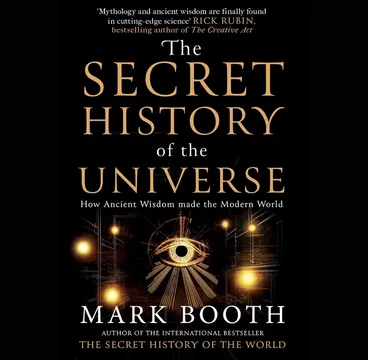
Mark Booth | Mystic Scientists, Strange Happenings, & The Secret History Of The Universe
• 7:45 - 11:50

Mark Booth | Mystic Scientists, Strange Happenings, & The Secret History Of The Universe

Isaac Newton and the Occult Roots of Quantum Physics

Isaac Newton is identified as a primary example of a scientist deeply embedded in alchemy, with economist Maynard Keynes famously labeling him the last of the magicians. Early 20th-century physicists like Heisenberg and Schrodinger turned to Indian mysticism, the Kabbalah, and Rosicrucianism to model the strange behaviors observed in the quantum realm. These pioneers used esoteric frameworks to understand particles popping in and out of existence and the influence of the observer on reality.
The Ethical Skeptic Roger B. Cunningham | ECDO Theory, Pole Shifts Explained, & Earth’s Cataclysmic Cycle
• 52:04 - 56:36

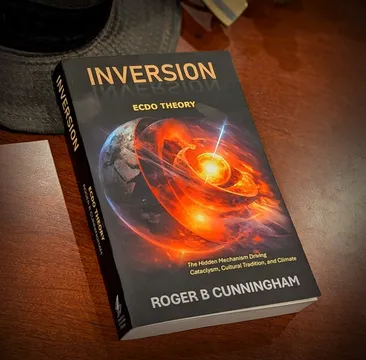
The Ethical Skeptic Roger B. Cunningham | ECDO Theory, Pole Shifts Explained, & Earth’s Cataclysmic Cycle

Azimuthal Alignment, Newgrange and Monument Obsequience

New measurements using satellite imagery confirm that many ancient monuments, such as Newgrange in Ireland, are aligned to North Pole Prime rather than solar events like the winter solstice. This "obsequience" suggests that ancient builders were obsessed with the celestial North Pole as the "unmovable mover" and the seat of God. The theory builds upon the work of Sir Isaac Newton, who suspected the Khufu pyramid was intimately connected to Earth's destructive cataclysmic cycles.

newgrangesacsayhuamanazimuthsatellite imagerysir isaac newtonobsequience
Matthew J. Bell | Bankers Trust, Nicholas Roerich, & The Mystic Stone From Sirius
• 58:34 - 1:00:56

Matthew J. Bell | Bankers Trust, Nicholas Roerich, & The Mystic Stone From Sirius

Albert Einstein, Logical Positivism and Alchemical Physics

Albert Einstein’s theory of relativity was heavily influenced by the philosophy of logical positivism and the work of Ernst Mach. Unlike Isaac Newton, who wrote extensively on alchemy and viewed the world as "God's sensorium," Einstein sought to calibrate reality strictly to empirically measurable phenomena like the speed of light. This shift in scientific philosophy is analyzed as a move toward a more pragmatic, yet potentially limited, understanding of the universe.

albert einsteinisaac newtonlogical positivismernst machrelativity
Matthew Ehret | Engineering Beliefs, Subculture Creation, & Revenge Of The Mystery Cults
• 13:58 - 20:29

Matthew Ehret | Engineering Beliefs, Subculture Creation, & Revenge Of The Mystery Cults

Elon Musk, Peter Thiel, and the Rosicrucian Magic Trick

Matthew Ehret links modern tech figures Elon Musk and Peter Thiel to a historical "Rosicrucian magic trick" dating back to the 17th century. He compares Musk to a "cardboard cutout" similar to Isaac Newton, alleging that their discoveries were actually stolen from real scientists like Johannes Kepler and Gottfried Leibniz. The summary posits that the oligarchy repurposes scientific breakthroughs to create a false sense of knowledge while maintaining a centralized control grid.

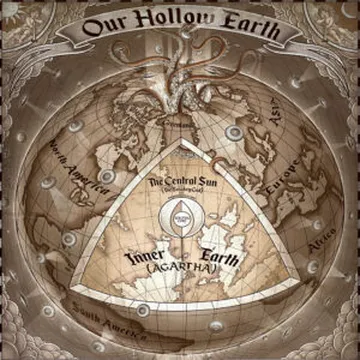
Dan Xuisoko | The Hollow Earth, The Lunar Wave, & Alchemical Eternal Youth
• 11:02 - 15:06

Dan Xuisoko | The Hollow Earth, The Lunar Wave, & Alchemical Eternal Youth

Leonhard Euler and the Inner Star Calculations

Mathematician Leonhard Euler is cited as a proponent of a 600-mile diameter star existing inside the Earth, a theory he reportedly shared with Isaac Newton. Zusoko compares the temperature of the Earth's core to the surface of the Sun and references eyewitness accounts of a 23.5 degree Celsius ambient temperature within the Earth's cavity. He notes that the deepest recorded earthquakes at 450 miles coincide with the theoretical path length from the surface to the inner cavity described in various legends.

John Hamer & Shannon Rowan | EMF Damage, Ancient Mysteries, & Royal Society Deceptions
• 33:42 - 37:06

John Hamer & Shannon Rowan | EMF Damage, Ancient Mysteries, & Royal Society Deceptions

Royal Society, Freemasonry, Scientific Control

John Hamer identifies the Royal Society and its ties to Freemasonry as the primary gatekeepers of acceptable science. Founded in the mid-1600s, the organization is accused of promoting a specific model of reality while suppressing dissenting data. Hamer claims that senior positions within the Royal Society are reserved for high-ranking Freemasons who steer the global scientific agenda.

Brian Cotnoir | Practical Alchemy, Alchemical Philosophy, & The Orum Potibile
• 39:09 - 43:50

Brian Cotnoir | Practical Alchemy, Alchemical Philosophy, & The Orum Potibile

Liquid Gold, Don Nance and Counterfeiting History

The conversation addresses claims by alchemist Don Nance regarding "Dragon's Blood" or liquid gold and its effects on consciousness. Cotenoir expresses skepticism, emphasizing the alchemical principle of *per ignem* (by fire), which requires claims to be reproducible and testable. He notes that historical prohibitions against alchemy, such as those by Diocletian, were often driven by fears of currency counterfeiting rather than spiritual suppression.

Lynne McTaggart | Intention Studies, Mind Magic, & The Power of Eight
• 28:13 - 30:23

Lynne McTaggart | Intention Studies, Mind Magic, & The Power of Eight

Biblical Antecedents and The Great Reset Critique

The history of intention is traced back to biblical teachings, specifically the Acts of the Apostles where Jesus encouraged group prayer and healing. McTaggart criticizes modern concepts like The Great Reset and transhumanist machinery implants, arguing they ignore the untapped miraculous potential of the human mind. She asserts that Newtonian science stripped the world of its inherent magic 300 years ago.

Eric P. Dollard | Tesla Tech, Understanding Aether, & The Digital Demon
• 1:07:39 - 1:09:57

Eric P. Dollard | Tesla Tech, Understanding Aether, & The Digital Demon

Plus Segment Recap and Upcoming Joint Sessions

The episode concludes with a recap of topics covered in the Plus second hour, including George Van Tassel's Integratron and Isaac Newton's work in alchemy. Carlwood mentions the impact of planetary forces on material substances, such as space weather affecting welding. He also announces an upcoming joint session on the 25th, urging listeners to attend despite recent live-streaming restrictions on YouTube.

Wayne McRoy Jr. | The Autism Epidemic, Transhumanism, & The A.I. Agenda
• 14:08 - 17:48

Wayne McRoy Jr. | The Autism Epidemic, Transhumanism, & The A.I. Agenda

Aluminum Industry Pollutants and Historical Revisionism of Autism

A correlation is drawn between the rise of the aluminum industry in the late 1800s and the emergence of autism-like symptoms. Wayne McRoy argues that a social engineering campaign is currently attempting to normalize autism by posthumously labeling historical figures like Albert Einstein, Isaac Newton, and Nikola Tesla as autistic. He claims this is a deliberate effort to rebrand a modern neurological injury as a beneficial evolutionary trait that has always existed.

aluminum industryneurological conditionsalbert einsteinisaac newtonsocial engineering
Dr. Joseph P. Farrell | Microcosm & Medium: The Cosmic Implications Of Mind Control Tech
• 22:02 - 24:07

Dr. Joseph P. Farrell | Microcosm & Medium: The Cosmic Implications Of Mind Control Tech

Microcosmism, Mechanistic Worldview vs. Living Organism

The ancient view of the cosmos as a living organism was replaced in the 17th century by a mechanistic worldview championed by figures like Isaac Newton and René Descartes. Farrell discusses the "microcosm" concept, where man is viewed as the bridge between the material and spiritual worlds. He notes that modern physics is returning to this idea through the anthropic principle, which observes that mankind stands at the center of the universe's scale.

microcosmmacrocosmisaac newtonrene descartesanthropic principlephysics
Preston Gibbs | Simulation Theory, Astrology, Power, & The History of Prediction Magic
• 26:48 - 29:55

Preston Gibbs | Simulation Theory, Astrology, Power, & The History of Prediction Magic

Historical Figures, Scientific Pedestals and Occult Interests

History often sanitizes the biographies of great scientists like Isaac Newton and Johannes Kepler by footnoting their deep commitments to alchemy and astrology. While modern textbooks present them solely as rational astronomers, their primary source materials show they considered occult studies to be their most important work. The tendency to dismiss these interests as "old age insanity" ignores that these figures often pursued the occult at the peak of their intellectual powers.

Walter Bosley | NYMZA, The Sonora Aero Club, & The Origins of the Breakaway Civilization
• 22:34 - 26:17

Walter Bosley | NYMZA, The Sonora Aero Club, & The Origins of the Breakaway Civilization

Materialist Science, Royal Society, Philosopher Scientists

The shift from "philosopher-scientists" to materialist "bean counters" occurred in the 1830s when materialists took control of the Royal Society. This transition marginalized hermeticism and alchemy in favor of Darwinism and atheism, leading to the suppression of "hidden physics." While mainstream science focused on repeatable laboratory results, secret factions continued to pursue the gemstones of knowledge preserved by the earlier hermetic tradition.

Cara St. Louis |Missing Time & the New Chronology
• 21:57 - 25:23

Cara St. Louis |Missing Time & the New Chronology

Isaac Newton, Johannes Kepler and Missing Primary Documents

Isaac Newton and Johannes Kepler are cited as historical figures who expressed skepticism or outright aggression toward the Scaligerian Chronicle. Newton's posthumous work argued that Greek antiquities were hundreds of years younger than claimed and shifted Egyptian dates forward by 2,000 years. The lack of original historical documents, many of which reportedly disappeared in fires, forces a reliance on copies produced by the very individuals accused of fabricating the timeline.

Rick Osmon | Hollow/Growing Earth & Secrets of Ancient America
• 24:11 - 26:03

Rick Osmon | Hollow/Growing Earth & Secrets of Ancient America

Edmund Halley, Concentric Spheres and Magnetic Studies

The history of hollow earth science is traced back to Edmund Halley’s 1692 model featuring seven concentric spheres. Halley developed this theory after conducting magnetic compass studies in the North Atlantic and observing that the magnetic poles did not align with the geographic axis. The segment also notes Halley's role in funding Isaac Newton and his famous prediction regarding the return of Halley's Comet.

edmund halleymagnetic polearctic oceanisaac newtonhalley's comet
Wal Thornhill | The Scientific Case For The Electric Universe
• 2:12 - 5:50

Wal Thornhill | The Scientific Case For The Electric Universe

Immanuel Velikovsky, Historical Influence on Electric Universe Theory

Wal Thornhill describes how reading Immanuel Velikovsky’s Worlds in Collision influenced his scientific trajectory toward the Electric Universe model. He recounts meeting Velikovsky in Princeton shortly before the author's death in 1979. The discussion highlights how historical figures like Newton and Faraday intuitively sensed the role of electricity in celestial mechanics.

immanuel velikovskyisaac newtonmichael faradayanthropologyplanetary gods
Sylvie Ivanova | New Chronology, Ayahuasca Insights, Atlantian Survivors, & The Reformation Conspiracy
• 13:34 - 17:05

Sylvie Ivanova | New Chronology, Ayahuasca Insights, Atlantian Survivors, & The Reformation Conspiracy

Scholars Challenging Official Chronology and the Dark Ages

Ivanova highlights various scholars throughout history, including Isaac Newton and Gunnar Heinsohn, who questioned the official timeline. Heinsohn's work suggests that the history of Mesopotamia and Egypt is 2,000 years too long due to biblical dating errors. The segment also addresses the "artificial thousand years," a period where human progress supposedly stopped globally, which researchers claim was an invention of later chroniclers.

isaac newtongunnar heinsohnsumeriansmesopotamiaartificial thousand years
Peter Levenda | Sinister Forces, Occult History, & The Nine
• 19:26 - 24:20

Peter Levenda | Sinister Forces, Occult History, & The Nine

Alchemy, Ceremonial Magic and the American Religious Experience

Levenda explores the "rejected knowledge" of alchemy and ceremonial magic practiced by early American figures like Cotton Mather and the Governor of Connecticut. He traces the lineage of these esoteric practices from the 17th century through the founding of Mormonism by Joseph Smith to L. Ron Hubbard and Jack Parsons in the 20th century. The segment argues that the American religious experience is deeply rooted in consciousness-altering rituals and occult philosophy.

Jay Dyer | Cinema Symbolism, Hollywood Psy-Ops, & Predictive Programming
• 28:02 - 31:47

Jay Dyer | Cinema Symbolism, Hollywood Psy-Ops, & Predictive Programming

Isaac Newton, Alchemy and Platonic Physics at CERN

The segment explores the alchemical roots of modern science, noting that Isaac Newton’s private writings were heavily focused on hermeticism. Dyer discusses the work of Wolfgang Pauli and Werner Heisenberg, who suggested that reality is structured by Platonic geometric forms. He highlights a video from CERN featuring Masonic symbolism and ritual dance as evidence of the ongoing link between science and the occult.

Dr. Joseph P. Farrell | Babylon’s Banksters, Financial Alchemy, & The Secret Science Connection
• 29:15 - 34:23

Dr. Joseph P. Farrell | Babylon’s Banksters, Financial Alchemy, & The Secret Science Connection

Mathematical Suppression and Lost Ancient Analysis

Farrell discusses the writings of mathematicians Descartes, Newton, and Leibniz, who all suspected that ancient civilizations possessed a powerful form of analysis that was later suppressed or lost. Leibniz specifically mentioned a "calculation that had nothing to do with numbers" to solve all problems. Farrell identifies this lost knowledge as the "topological metaphor," which allows for the discovery of abstract structures within ancient texts.

rene descartesisaac newtongottfried leibnizanalytical geometrycalculustopological metaphor