Topic: Mesopotamia

Mesopotamia comes up in 18 chapters across 16 episodes of The Higherside Chats Free Show, from June 2012 to November 2025.

June 2012 November 2025

Related topics

David Icke | Hidden Knowledge, Alt Media Infiltration, & The Global Cult
• 37:14 - 41:42

David Icke | Hidden Knowledge, Alt Media Infiltration, & The Global Cult

Ancient Babylon and the Force Behind the Long Game

Icke traces the origins of the global conspiracy back to ancient Babylon, Mesopotamia, and Sumer. He argues that because human lives are short, a persistent interdimensional force must be orchestrating the long-term centralization of power. By limiting the human lifespan, the manipulators ensure that individuals do not live long enough to fully recognize the patterns of the control system.


Dr. Heather Lynn | Censoring Human Origins, Magic, Baphomet, & The Academic Blockade
• 31:11 - 35:54

Dr. Heather Lynn | Censoring Human Origins, Magic, Baphomet, & The Academic Blockade

Apkallu Sages and the Pre-Flood Advanced Society

Distinguishing between the Anunnaki and the Apkallu is essential, as the latter are described as semi-biological sages originating from the Pleiades. Dr. Lynn proposes that these "Shining Ones" were not necessarily extraterrestrial but survivors of a pre-flood advanced society who displaced hunter-gatherers in Mesopotamia. The term "worship" in this context originally meant "to work for," suggesting a system of agricultural enslavement.

apkallupleiadesmesopotamiaflood cataclysmshining ones
Free Plus Show: Dr. Gregory L. Little | Origins Of The Gods, Sentient Plasma, & Shamanic Contact
• 9:51 - 14:58

Free Plus Show: Dr. Gregory L. Little | Origins Of The Gods, Sentient Plasma, & Shamanic Contact

Carl Sagan and the Statistical Probability of Ancient Alien Visitation

Astronomer Carl Sagan published a 1963 article in the journal Space & Science calculating that Earth has likely been visited by advanced civilizations 10,000 times over the last two million years. Sagan suggested that evidence of these visits might be found in ancient sites like Baalbek or Mesopotamia. Despite his belief in ancient visitation, Sagan remained a skeptic regarding modern UFO reports, attributing them to other phenomena.

RamX | Fortean Winds: High Strangeness, Ufology, & Old Money
• 40:32 - 44:35

RamX | Fortean Winds: High Strangeness, Ufology, & Old Money

Elongated Skulls, Human Sacrifice and Occult Overlap

Rom X examines the presence of elongated skulls in Malta and Nazca, noting that some specimens lack evidence of artificial head binding. He explores the historical correlation between these biological anomalies, UAP activity, and human sacrifice in ancient cultures. The segment argues for a "powwow" between ufologists and occultists to address the overlap in their respective fields of study.

Dr. Gregory L. Little | Origins Of The Gods, Sentient Plasma, & Shamanic Contact
• 10:29 - 14:38

Dr. Gregory L. Little | Origins Of The Gods, Sentient Plasma, & Shamanic Contact

Carl Sagan, Ancient Alien Visitation Odds and Mainstream Skepticism

The discussion highlights a 1963 peer-reviewed article by astronomer Carl Sagan, who calculated that Earth has likely been visited by extraterrestrials roughly 10,000 times over the last two million years. While Sagan is often viewed as the ultimate skeptic, his mathematical models supported the idea of ancient monitoring, specifically suggesting researchers look for evidence in places like Baalbek and Mesopotamia. Erich von Däniken, a pioneer of ancient astronaut theory, provided the introduction for Dr. Little's new book.

Michael Wann | Reality, Consciousness, & Escaping The Matrix
• 56:07 - 1:00:23

Michael Wann | Reality, Consciousness, & Escaping The Matrix

Mesopotamia, Civilization Matrix and Behavioral Imprinting

Wan critiques the standard historical narrative of Mesopotamia, questioning how nomadic hunter-gatherers suddenly developed complex tax codes, industry, and banking. He argues that these ancient systems never went away and that humans are imprinted with the "civilization matrix" during their first seven years of life. This imprinting ensures that individuals internalize the habits and structures of the system they are born into.

mesopotamiasumerbabylonsocial classbehavioral imprinting
Austin Coppock | Assessing Omens, Divine Kingship, The Picatrix, & Astrological Magic
• 12:34 - 16:30

Austin Coppock | Assessing Omens, Divine Kingship, The Picatrix, & Astrological Magic

Hollywood Scandals, Falling Stars and the Dummy King Sacrifice

The downfall of high-profile figures in Hollywood and the numerous firings within the presidential administration are framed as the "falling of stars" predicted by 4th-century texts. Drawing on ancient Mesopotamian and Babylonian traditions, the hosts discuss the "dummy king" sacrifice, where leaders would symbolically substitute others to appease dire omens. This tactic is suggested as a possible explanation for why certain individuals are removed from power while the primary leader remains.

hollywoodmesopotamiababylondummy kingpolitical firings
Austin Coppock | Assessing Omens, Divine Kingship, The Picatrix, & Astrological Magic
• 20:25 - 24:18

Austin Coppock | Assessing Omens, Divine Kingship, The Picatrix, & Astrological Magic

Divine Kingship, Pacing the Void and Elite Astrology

The historical role of the sovereign as a mediator between heaven and earth is explored through the lens of ancient Mesopotamian and Chinese traditions. In Imperial China, as detailed in the book "Pacing the Void," it was often illegal for anyone except the Emperor's employees to study astrology, as it was considered a divine right of the ruler. This "mandate of heaven" allowed the elite to monitor celestial cycles to shape the future of the kingdom and maintain power.

divine kingshipmesopotamiachinamandate of heavenpacing the void
Preston Gibbs | Simulation Theory, Astrology, Power, & The History of Prediction Magic
• 19:56 - 23:25

Preston Gibbs | Simulation Theory, Astrology, Power, & The History of Prediction Magic

Hellenistic Astrology, Claudius Ptolemy and Tetrabiblos

Astrology congealed into its recognizable fourfold system of signs, planets, houses, and aspects around 100 BCE during the Hellenistic period. Claudius Ptolemy’s "Tetrabiblos" served as the foundational text for centuries, though modern researchers like Chris Brennan suggest Ptolemy’s system deviated from earlier standards like whole sign houses. Ptolemy is credited with preserving the field during a time of increasing religious and scientific hostility.

claudius ptolemyhellenistic astrologytetrabibloschris brennanmesopotamia
Peter Levenda | Lovecraft, The Yazidi, & Middle Eastern Magic
• 28:23 - 32:29

Peter Levenda | Lovecraft, The Yazidi, & Middle Eastern Magic

Yazidi Origins and the Importance of Mosul Antiquities

The Yazidi people claim descent from ancient Sumerians and maintain a unique religious system that predates major monotheistic faiths. Mosul and the nearby ruins of Nineveh serve as critical repositories for untranslated cuneiform texts and ancient artifacts that may hold the key to humanity's origins. The ongoing genocide against the Yazidis by the Islamic State threatens to erase these ancient cultural links and the knowledge they possess.

yazidisumerianscuneiformmesopotamianinevehmosulpeacock angel
Peter Levenda | Lovecraft, The Yazidi, & Middle Eastern Magic
• 36:54 - 42:58

Peter Levenda | Lovecraft, The Yazidi, & Middle Eastern Magic

Preservation of the Yazidi Black Book and Oral Traditions

The Yazidi maintain highly insular oral traditions and a mysterious text known as The Black Book, which has been subject to forgery and controversy. The 2014 siege of Mount Sinjar by the Islamic State brought the Yazidi into the global spotlight, prompting U.S. military intervention to prevent their extermination. Protecting these people is framed as essential for the human race, as they hold ancestral knowledge of the shrines and underground texts of Mesopotamia.

the black bookoral traditionmount sinjarislamic statecultural genocidemesopotamia
Joshua Cutchin | The Food and Drink Offerings Of Aliens, Faeries, and Sasquatch
• 5:08 - 8:25

Joshua Cutchin | The Food and Drink Offerings Of Aliens, Faeries, and Sasquatch

Global Mythology, Persephone and Glamoured Food

Mythological traditions worldwide feature the theme of forbidden food, from the Greek myth of Persephone and the pomegranate seed to the Finnish Kalevala and Japanese tales of Izanami. In many accounts, the food offered by entities is revealed to be "glamoured" or disguised, appearing as a feast but actually consisting of tree bark, leaves, or worms. These stories appear in Mesopotamian, Nordic, and South Pacific island cultures, challenging the idea that they originate from a single source.

David Talbott | The Electric Universe, The Saturn/Sun Swap, & The Reconstructing Of Mythology
• 43:39 - 50:02

David Talbott | The Electric Universe, The Saturn/Sun Swap, & The Reconstructing Of Mythology

Saturn Sun Hypothesis, Mesopotamian Astronomy and Ancient Helios

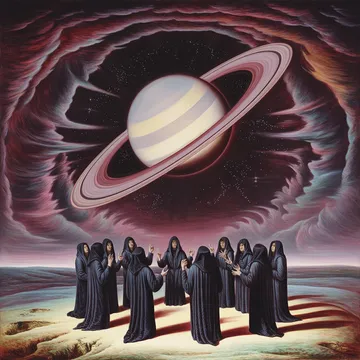
Ancient astronomical records from Mesopotamia and Greece identify the planet Saturn as the original "Sun" or "Sun God" (Shamash, Helios, Sol). This linguistic and mythological ambiguity suggests that the solar system's configuration was radically different in the remote past. The Electric Universe model posits that Saturn was once the primary star for Earth, a theory that resolves numerous historical and mythological mysteries.

saturnshamashmesopotamiaheliossolancient sunplanetary migration
Sylvie Ivanova | New Chronology, Ayahuasca Insights, Atlantian Survivors, & The Reformation Conspiracy
• 13:34 - 17:05

Sylvie Ivanova | New Chronology, Ayahuasca Insights, Atlantian Survivors, & The Reformation Conspiracy

Scholars Challenging Official Chronology and the Dark Ages

Ivanova highlights various scholars throughout history, including Isaac Newton and Gunnar Heinsohn, who questioned the official timeline. Heinsohn's work suggests that the history of Mesopotamia and Egypt is 2,000 years too long due to biblical dating errors. The segment also addresses the "artificial thousand years," a period where human progress supposedly stopped globally, which researchers claim was an invention of later chroniclers.

isaac newtongunnar heinsohnsumeriansmesopotamiaartificial thousand years
Dr. Joseph P. Farrell | The Cosmic War & The Treaty of Versailles Template
• 2:25 - 6:32

Dr. Joseph P. Farrell | The Cosmic War & The Treaty of Versailles Template

Mesopotamian Texts and the Exploded Planet Hypothesis

Joseph Farrell analyzes the Enuma Elish as a war epic describing an interplanetary conflict rather than a mere creation myth. He links these Mesopotamian texts to the research of the late Dr. Tom Van Flandern, a US Naval Observatory astronomer who proposed the exploded planet hypothesis for the origin of the asteroid belt. Farrell suggests that the character Marduk measuring the "structure of the deep" refers to recalibrating celestial mechanics after a planetary destruction.

Dr. Joseph P. Farrell | Babylon’s Banksters, Financial Alchemy, & The Secret Science Connection
• 9:32 - 14:14

Dr. Joseph P. Farrell | Babylon’s Banksters, Financial Alchemy, & The Secret Science Connection

Ancient Astrology and High Financial Power Alliances

The discussion explores how ancient astrology in Egypt and Babylon was a science of aggregate prediction for nation-states rather than individuals. Farrell highlights a persistent historical pattern where high financial powers, such as Mitsubishi Bank or J.P. Morgan, align themselves with esoteric sciences or high physics. This alliance is traced back to ancient temples that managed both religious metaphysics and currency exchange.

wallace budgemesopotamiaegyptmitsubishi bankj.p. morgannikola tesla
THC 23: Pat Chouinard | Ancient Civilizations, Alien Intervention, & The Terran Race
• 18:23 - 21:43

THC 23: Pat Chouinard | Ancient Civilizations, Alien Intervention, & The Terran Race

Gobekli Tepe and the Failure of Textbooks

Gobekli Tepe is cited as definitive evidence that massive architectural structures existed as far back as 12,000 BCE, predating Sumer by thousands of years. Despite the site being a verified archaeological fact, Channard notes that mainstream textbooks still teach that civilization began in 3500 BC. This discrepancy is presented as a primary example of the academic paradigm's refusal to update.