Topic: Philosophy

Philosophy comes up in 64 chapters across 57 episodes of The Higherside Chats Free Show, from February 2012 to September 2026.

February 2012 September 2026

Related topics

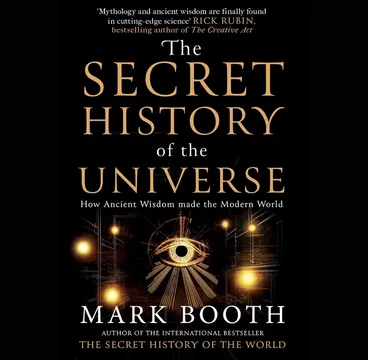
Mark Booth | Mystic Scientists, Strange Happenings, & The Secret History Of The Universe
• 47:32 - 50:11

Mark Booth | Mystic Scientists, Strange Happenings, & The Secret History Of The Universe

Meaning in the Materialist vs. Cosmic Worldview

The discussion contrasts the materialist view—where consciousness is a temporary accident in a meaningless sea of matter—with the cosmic mind view, where every event is intrinsically meaningful. Living strictly by a materialist creed often leads to psychological distress because it denies the possibility of destiny or purpose. Booth argues that it is more functional and fulfilling to operate under the assumption that life has inherent meaning.


Mark Booth | Mystic Scientists, Strange Happenings, & The Secret History Of The Universe
• 53:45 - 55:58

Mark Booth | Mystic Scientists, Strange Happenings, & The Secret History Of The Universe

Conclusion of Interview with Mark Booth

Greg Carlwood concludes the interview by praising Mark Booth's ability to challenge the "high and mighty" academic adherence to materialism. Booth states that he only writes when he has something truly new to say and does not consider himself a career writer. The host encourages listeners to read the extensive footnotes in Booth's books to discover the more bizarre paranormal details.

mark boothsecret history of the universeliteraturephilosophygreg carlwood
Lance Baker & Mat Dragonstone | Reiki, Talismans, & The Pleiades Pendulum Set
• 16:04 - 20:55

Lance Baker & Mat Dragonstone | Reiki, Talismans, & The Pleiades Pendulum Set

Matt Dragonstone, Philosophy and the Rejection of Materialism

Matt Dragonstone details his journey from a childhood fascination with the occult to a career in academia and eventually professional astrology. Despite earning a PhD in post-structuralism and ancient Greek philosophy, he felt stifled by the "atheistic materialist indoctrination" of the university system. He describes the transition from a depressing corporate insurance job to openly practicing as an astrological magician and tarot reader at age 33.

post-structuralismacademiatarotatheistic materialismphilosophyastrology
DoeNut | Methylene Blucifer, 2026 Ritual Sacrifice, & WiFi Mantis Beings
• 1:01:54 - 1:06:30

DoeNut | Methylene Blucifer, 2026 Ritual Sacrifice, & WiFi Mantis Beings

Jason Giorgiani and Grounding in Reality

Greg Carlwood mentions that guest Jason Giorgiani recently canceled an appearance, leading to this session with Donut, who has been studying Giorgiani's book "Closer Encounters." They discuss the psychological toll of deep conspiracy research, emphasizing the need to stay grounded to avoid "schizo" patterns where every data point becomes overwhelming. Donut advocates for long-form content as a way to retrain the brain away from high-anxiety social media algorithms.

jason giorgianicloser encountersphilosophyschizophreniaalgorithms
Nick Hinton | The Psypocalypse, Father Seraphim Rose,  & Quantum Sorcery Chaos Magic
• 1:13:33 - 1:18:36

Nick Hinton | The Psypocalypse, Father Seraphim Rose, & Quantum Sorcery Chaos Magic

Second Hour Preview and the Theology of Dispensationalism

The host previews the second hour of the interview, covering topics like the symbolism of architecture and personal encounters with dark energy. He shares additional thoughts from Nick Hinton regarding the "wisdom of the world" versus the "wisdom of the Spirit." A final "fun fact" notes that Aleister Crowley was raised in the same Christian cult that popularized dispensationalism, a system focusing on literal biblical prophecy.

nephilimspiritual warfarealeister crowleydispensationalismperennial philosophy
Matthew J. Bell | Twilight Language, The Rebirth of Pan, & The Occult Advisors Of The Ruling Class
• 1:06:35 - 1:10:31

Matthew J. Bell | Twilight Language, The Rebirth of Pan, & The Occult Advisors Of The Ruling Class

Crowdsourcing Synchromysticism and Perennial Content

Matthew J. Bell discusses his current projects on YouTube and Substack, emphasizing his goal to create "perennial" content that remains relevant over time. He explains his approach of blending deep philosophical dives—covering topics like nominalism and Platonic realism—with specific synchromystic case studies. He invites audience feedback and "crowdsourcing" to further explore these phenomena.

The Holosky Guys | The Cult of the Black Cube, CERN Portals, & Other High Strangeness
• 36:16 - 38:59

The Holosky Guys | The Cult of the Black Cube, CERN Portals, & Other High Strangeness

Personal Anecdote on Vasectomies and the Nature of Fate

A personal story about getting a vasectomy serves as a springboard for a philosophical debate on the nature of fate versus intentional choice. The speaker argues that if a higher power intended a different outcome, external obstacles would have prevented the medical appointment from occurring. This leads to a discussion on whether powerful entities manipulate human perception of destiny to encourage specific behaviors.

Ryan Cristian | Trump 2.0 Election Aftermath, Statism, & Smart Dust
• 28:28 - 33:23

Ryan Cristian | Trump 2.0 Election Aftermath, Statism, & Smart Dust

Libertarianism, Lesser of Two Evils and Political Idioms

A philosophical debate ensues regarding the "lesser of two evils" voting strategy and the idiom "perfect is the enemy of good." The speakers discuss the trap of accepting "table scraps" from the state instead of striving for a truly voluntary society. This segment explores the difficulty of maintaining principled libertarian or anarchist views while living within a statist framework.

libertarianismvoluntarismlesser of two evilspolitical philosophycompromise
Dr. Roger McFillin | The Chemical Imbalance Myth, Predatory Psychiatry, & Mood Management Industry
• 1:11:55 - 1:17:55

Dr. Roger McFillin | The Chemical Imbalance Myth, Predatory Psychiatry, & Mood Management Industry

Philosophical Reflections on Mental Health and Self-Observation

Greg Carlwood reflects on the necessity of taking breaks from the internet and news to manage anxiety and depression. He questions the validity of absolute reliance on medication, suggesting that many people can manage their internal worlds through self-observation and life adjustments. The segment concludes that the psychiatric industry often operates from a place of profit rather than altruism, creating "solutions" for problems they helped define.

Jim Willis | Entangled Spirit Beings, Unseen Energy, Ancient Technology, & The Conspiracy of Silence
• 43:06 - 46:45

Jim Willis | Entangled Spirit Beings, Unseen Energy, Ancient Technology, & The Conspiracy of Silence

Deathbed Reflections and Overcoming the Fear of Dying

An anecdote about a successful university founder named Bradley highlights the common lack of preparation for the moment of death despite a lifetime of professional achievement. The guest argues that Western society's avoidance of mortality leads to pervasive fear, which can be mitigated through spiritual practice and engagement with the "source." Developing a calm and open approach to the end of life is presented as a vital component of a meaningful existence.

Free Plus Show: Ben Joseph Stewart | Esoteric Agendas, Cosmic Colonization, & The Mud Flood
• 1:58:57 - 2:02:51

Free Plus Show: Ben Joseph Stewart | Esoteric Agendas, Cosmic Colonization, & The Mud Flood

The Four Pillars of Society and Shamanic Traditions

Ben Joseph Stewart defines science, philosophy, religion, and art as the four pillars of human consciousness present in every civilization. He discusses the historical suppression of shamans and "witches" during the Inquisition and colonization as a means to sever humanity's connection to altered states. He specifically mentions the Lakota "Keeping of the Souls" ceremony as a vital rite that was targeted by the U.S. government to break the nation's spirit.

Erik Davis |  LSD, Drug Portals, Psychedelic Animism, & The Alien Interface
• 37:49 - 44:31

Erik Davis | LSD, Drug Portals, Psychedelic Animism, & The Alien Interface

Reality as an Interface, The Trash Can Analogy and Serious Non-Literalism

Davis proposes that visionary experiences act as an "interface" similar to a computer's graphical user interface. Just as a "trash can" icon allows a human to interact with complex machine code, religious archetypes like Mary or Jesus allow the mind to interact with abstract cosmic information. He advocates for the philosophy of taking these experiences "seriously but not literally" to avoid the traps of delusion or dismissive materialism.

James D. Madden | Unidentified Flying Hyperobject, The Uber-Umwelt, & The Cave
• 0:08 - 2:53

James D. Madden | Unidentified Flying Hyperobject, The Uber-Umwelt, & The Cave

James Madden, Philosophy and the UFO Hyperobject

Greg Carlwood introduces James Madden, a PhD in philosophy and professor at Benedictine College. Madden is the author of "Unidentified Flying Hyperobject: UFOs, Philosophy and the End of the World," a work that applies philosophical frameworks to the UFO enigma. The introduction highlights Madden's background as a lifelong athlete and scholar who seeks to move beyond standard materialist tropes in ufology.

james maddenbenedictine collegehigher side chatsphilosophyufology
James D. Madden | Unidentified Flying Hyperobject, The Uber-Umwelt, & The Cave
• 2:53 - 6:31

James D. Madden | Unidentified Flying Hyperobject, The Uber-Umwelt, & The Cave

X-Files, Pentagon Briefings, and Cognitive Limits

James Madden describes his transition from a casual viewer of the X-Files to a serious researcher of the UFO phenomenon following the 2017 Pentagon briefings. He explains how his professional work in the philosophy of mind, specifically regarding how humans limit their perception to navigate the world, correlates with the persistent nature of anomalous experiences. He references Martin Heidegger and the Pittsburgh School of Philosophy to argue that humans oversimplify reality, leaving a vast amount of information unperceived.

x-filespentagoncognitionmartin heideggerpittsburgh school of philosophy
Gordon White | Finding The Earthkeepers, The Future Forecast, & The Iodine Era
• 48:40 - 52:14

Gordon White | Finding The Earthkeepers, The Future Forecast, & The Iodine Era

Spiritual Philosophers, Charles Eisenstein and Bayo Akomolafe

Gordon White recommends several thinkers for individual guidance, including Charles Eisenstein and conflict resolution expert Orland Bishop. Bayo Akomolafe’s concept of "post-activism" is discussed, which questions whether traditional responses to crisis actually exacerbate the problem. These figures are praised for offering "trickster wisdom" and Daoist-style insights.

charles eisensteinorland bishopbayo akomolafepost-activismhealingphilosophy
Diana Walsh Pasulka | Entity Encounters, The Order Of The Dolphin, & The Electric Raccoon
• 15:52 - 17:18

Diana Walsh Pasulka | Entity Encounters, The Order Of The Dolphin, & The Electric Raccoon

Mystical Impetus, Jean-Jacques Rousseau and The Social Contract

The discussion shifts to the mystical roots of Western philosophy, specifically citing Jean-Jacques Rousseau's "The Social Contract." Pasulka highlights how even secular philosophical texts often begin with mystical experiences or insights into human freedom and bondage. She posits that the "religious impulse" is a powerful and potentially dangerous force that societies frequently attempt to domesticate.

jean-jacques rousseauthe social contractmysticismphilosophyreligious impulse
David Avocado Wolfe | The Magic Of Nature, Rudolf Steiner, & Charles Fort
• 13:30 - 16:05

David Avocado Wolfe | The Magic Of Nature, Rudolf Steiner, & Charles Fort

Philosophy of Charles Fort and the Science Bullies

David Wolf discusses the influence of Charles Fort, particularly his critique of "scientism" and the tendency of mainstream science to "bully" its worldview by deleting anomalous data. He highlights Fort's philosophy that one cannot understand the "all" by excluding the "damned" facts that do not fit established theories. The segment emphasizes the power of censorship in maintaining fake structures of knowledge.

Brian Cotnoir | Alchemical Art, Ensouling Statues, & The Underrated Value Of Going Inward
• 11:57 - 17:03

Brian Cotnoir | Alchemical Art, Ensouling Statues, & The Underrated Value Of Going Inward

Aristotelian Elements and the Basis of Transmutation

The discussion explores the Aristotelian foundations of alchemy, focusing on the two pairs of opposites: hot/cold and dry/wet. These underlying principles give rise to the four elements of fire, earth, water, and air. Copenhaver demonstrates how adding or removing heat from water (cold and wet) to create steam (hot and wet) serves as the fundamental philosophical and physical basis for distillation and alchemical transmutation.

Dean Henderson |  Royal Bloodline Wetiko, The Civilization Sin, & The Congo Conspiracy
• 43:39 - 46:42

Dean Henderson | Royal Bloodline Wetiko, The Civilization Sin, & The Congo Conspiracy

Malthusian Philosophy, Thomas Hobbes and University Indoctrination

The guest critiques the influence of philosophers like Thomas Malthus and Thomas Hobbes, whose ideas were promoted by the Royal Society to justify war and population control. These "Wetiko" mindsets are still taught in universities to instill fear and a twisted view of human nature. The segment concludes with a call for self-defense against the parasitic ruling class, arguing that humanity has a moral obligation to remove them.

thomas malthusthomas hobbesroyal societyphilosophywar
John Hamer & Shannon Rowan | EMF Damage, Ancient Mysteries, & Royal Society Deceptions
• 23:12 - 25:10

John Hamer & Shannon Rowan | EMF Damage, Ancient Mysteries, & Royal Society Deceptions

Plato, Atlantis, Historical Non-Fiction

A brief comparison is made between the accounts of Pliny the Elder and the writings of Plato regarding the lost continent of Atlantis. The authors argue that because these figures were known for writing non-fiction, their accounts of "mythical" technologies or places should be taken seriously rather than dismissed as allegory.