Topic: Academia

Academia comes up in 39 chapters across 34 episodes of The Higherside Chats Free Show, from February 2014 to September 2026.

February 2014 September 2026

Related topics

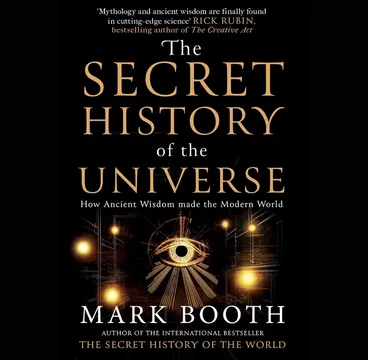
Mark Booth | Mystic Scientists, Strange Happenings, & The Secret History Of The Universe
• 4:53 - 7:44

Mark Booth | Mystic Scientists, Strange Happenings, & The Secret History Of The Universe

Scientific Establishment and Secret Occult Interests

Despite the public-facing materialism of modern academic institutions, Mark Booth reveals that many high-level scientists, spies, and public figures maintain deep interests in the esoteric. He describes a specific professor at a top English university who leads magical ceremonies in a secret society while maintaining a traditional academic persona. This highlights a disconnect between the atheistic establishment and the private mystical lives of its members.

Lance Baker & Mat Dragonstone | Reiki, Talismans, & The Pleiades Pendulum Set
• 16:04 - 20:55

Lance Baker & Mat Dragonstone | Reiki, Talismans, & The Pleiades Pendulum Set

Matt Dragonstone, Philosophy and the Rejection of Materialism

Matt Dragonstone details his journey from a childhood fascination with the occult to a career in academia and eventually professional astrology. Despite earning a PhD in post-structuralism and ancient Greek philosophy, he felt stifled by the "atheistic materialist indoctrination" of the university system. He describes the transition from a depressing corporate insurance job to openly practicing as an astrological magician and tarot reader at age 33.

post-structuralismacademiatarotatheistic materialismphilosophyastrology
Dan Waites | How Power Uses Astrology, Planetary Cycles, & Disclosure Season
• 11:01 - 15:47

Dan Waites | How Power Uses Astrology, Planetary Cycles, & Disclosure Season

Academic Aversion to Astrology and Conspiracy Narratives

Many professional astrologers avoid conspiratorial thinking to gain respect from academia and the professional managerial class. However, the realization that astrology functions effectively often leads to the conclusion that standard institutional narratives are deceptive. There is also a noted lack of overlap between the fields of ufology and astrology, as practitioners in both fields often seek to distance themselves from other "fringe" subjects to maintain a semblance of respectability.

academiaconspiracy theoriesufologyprofessional managerial classknowledge production
George Howard | Suppressed Plasma Physics, Lost Civilizations, & The Cosmic Summit
• 3:13 - 6:19

George Howard | Suppressed Plasma Physics, Lost Civilizations, & The Cosmic Summit

Cosmic Tusk Philosophy, Rationalism and Speculative Science

George Howard explains the origins of the Cosmic Tusk brand and his personal background as a "pajama scientist" influenced by both rationalist and New Age perspectives. He describes the Cosmic Summit's structure, which balances credentialed researchers with popularizers like Randall Carlson and Ben from Uncharted X. The discussion addresses the "willful ignorance" of mainstream academia regarding discoveries that challenge established orthodoxy.

cosmic tuskrationalismspeculative sciencerandall carlsonuncharted xacademia
THC Book Report | Charged by Dr. Gerald Pollack
• 12:14 - 16:14

THC Book Report | Charged by Dr. Gerald Pollack

Electrogravitics, T. Townsend Brown, Lifter Technology

Research into electrogravitics and the work of T. Townsend Brown suggests that rotation and electrical charge can produce anti-gravitic effects. Dr. Pollack confirms that his laboratory successfully built "lifters," which are engineless devices that levitate using high-voltage potential differences. The segment notes that while this technology was studied in the mid-20th century, it largely disappeared from academia as government agencies classified the research.

THC Book Report | Charged by Dr. Gerald Pollack
• 21:16 - 22:48

THC Book Report | Charged by Dr. Gerald Pollack

Academic Gatekeeping, Suppression of Radical Scientific Departures

The academic structure is criticized for reinforcing existing models and marginalizing researchers who propose radical departures from mainstream physics. Economic pressures, the peer-review process, and specialized expertise act as gatekeeping mechanisms that prevent new discoveries in water science and electricity from gaining acceptance. Dr. Pollack's work is presented as an attempt to navigate this landscape by maintaining professional credibility while challenging fundamental assumptions.

Steve & Krys Crimi | Hermes, Inverted Myth, Sacrifice, & Gnosis
• 1:03:10 - 1:07:22

Steve & Krys Crimi | Hermes, Inverted Myth, Sacrifice, & Gnosis

Logo Sophia Publications and Plagiarism Anecdote

Steven and Chris provide their contact information and website, Logosophiabooks.com, which features 30 published titles. Steven shares a "funny story" about discovering a scholarly paper on Academia.edu that had plagiarized his own work comparing Hamlet to Arjuna from the Bhagavad Gita. The segment concludes with a summary of the interview's themes regarding the spiritual filtration of worldly events.

Dr. Heather Lynn | Censoring Human Origins, Magic, Baphomet, & The Academic Blockade
• 7:56 - 13:35

Dr. Heather Lynn | Censoring Human Origins, Magic, Baphomet, & The Academic Blockade

Academic Gatekeeping and the American Anthropological Association

Dr. Heather Lynn describes her experience in academia as a struggle against established narratives and institutional gatekeeping. She recalls an archaeology professor assigning students to debunk "pet theories" of scholars like Graham Hancock and Michael Cremo. The discussion highlights how the American Anthropological Association prioritizes securing the professional authority of archaeologists over the objective validation of new theories.

academiamichael cremograham hancockarchaeologyamerican anthropological association
Dr. Heather Lynn | Censoring Human Origins, Magic, Baphomet, & The Academic Blockade
• 1:16:01 - 1:19:38

Dr. Heather Lynn | Censoring Human Origins, Magic, Baphomet, & The Academic Blockade

Outro and The Academic Double Agent Song

The show concludes with a summary of Dr. Heather Lynn's "double agent" status in academia and a closing song featuring AI-generated music. The lyrics, written by the host, reflect on the challenges of pursuing anomalous research within institutional constraints. The host defends the use of AI music as a creative outlet for his poetry and signs off for the week.

David Barnhizer | Conformity Colleges, Education Infiltration, & Weaponized Compassion
• 34:32 - 37:13

David Barnhizer | Conformity Colleges, Education Infiltration, & Weaponized Compassion

Academic Echo Chambers, Victor Davis Hanson and the Tsunami Effect

Barnheiser recounts an anecdote from a law school conference where an entire room of female teachers self-identified as leftists, illustrating the lack of ideological diversity in academia. He references Victor Davis Hanson’s description of this cultural shift as a "tsunami" that built up slowly before becoming overwhelming. The segment explains how this self-reinforcing system moves from K-12 schools to universities and eventually into the corporate and NGO sectors.

victor davis hansonhoover instituteacademiabrainwashingngocorporate system
Matthew Lacroix | The Epic of Humanity & The Suppressed History of Sacred Knowledge
• 9:30 - 13:16

Matthew Lacroix | The Epic of Humanity & The Suppressed History of Sacred Knowledge

Academic Resistance, Archaeological Gatekeeping, Graham Hancock

The discussion addresses the friction between independent researchers and the academic establishment regarding lost civilizations. LaCroix argues that while individual archaeologists may be open-minded, institutional "handlers" control the cataloging and narrative of artifacts. He cites the work of Graham Hancock, Robert Bauval, and John Anthony West as the foundation for a new movement involving PhDs and masters-level academics. The goal is to move beyond the standard 6,000-year historical narrative which the speaker describes as increasingly untenable.

Ronnie Pontiac | Remembering Manly P. Hall, American Metaphysical Religion, & The Pagan Pilgrim
• 43:35 - 48:51

Ronnie Pontiac | Remembering Manly P. Hall, American Metaphysical Religion, & The Pagan Pilgrim

The Platonist Newspaper and the Academic Revolution in Esotericism

Pontiac recounts discovering a bound volume of "The Platonist," a 19th-century newspaper from a "cowboy town" near St. Louis that featured translations of Neoplatonists and Eliphas Levi. This discovery led him to investigate how such esoteric material flourished in the American West. He notes a recent "academic revolution" where historians began treating esoteric archives with objective rigor rather than dismissal. This new research debunked long-held myths, such as the supposed friendship between Rosicrucians Robert Fludd and Michael Maier.

the platonistst. louisacademiajstorerobert fludd
George P. Hansen | The Trickster, The UFO, & The Taboo
• 17:58 - 19:44

George P. Hansen | The Trickster, The UFO, & The Taboo

Academic Bureaucracy, Institutional Penalties for Interdisciplinary Research

The structure of modern academia is described as inimical to understanding boundary-blurring phenomena like the trickster. George P. Hansen explains that scholars are often penalized or marginalized for crossing disciplinary lines between the humanities and hard sciences. This bureaucratic rigidity prevents experts from addressing topics outside their narrow expertise, effectively suppressing research into high strangeness.

academiabureaucracyspecializationinstitutional biasmarginalization
Brian Cotnoir | Alchemical Art, Ensouling Statues, & The Underrated Value Of Going Inward
• 3:24 - 7:40

Brian Cotnoir | Alchemical Art, Ensouling Statues, & The Underrated Value Of Going Inward

Academic Resistance to Esoteric Studies in Art Schools

Brian Copenhaver observes a growing thirst among young artists for esoteric material despite historical resistance from traditional art academies. While universities have traditionally funneled students toward the commercial art market, Copenhaver notes a shift evidenced by events like the Occult Humanities Conference at NYU. He argues that while artists must survive financially, they should seek "cracks" in the system to explore deeper spiritual and alchemical meanings in their work.

nyuoccult humanities conferenceart marketacademiaesoteric art
Dr. Jacob Nordangard | Philanthrocapitalism, Recent UN Policy Briefs, & The Digital World Brain
• 9:24 - 15:40

Dr. Jacob Nordangard | Philanthrocapitalism, Recent UN Policy Briefs, & The Digital World Brain

Academic Gatekeeping, Climate Science as Religion

A researcher describes facing significant professional friction in 2008 after presenting a paper titled Thoughts Lead Into Action, which traced the oil interests behind the climate agenda. Academic supervisors at the Climate Policy Center in Norrköping discouraged the research, citing its potential to jeopardize funding tied to the established climate narrative. The experience characterizes modern climate science as a dogmatic belief system rather than a neutral field of inquiry.

academianorrköpingclimate policy centerpeer reviewdissent
The Arkon & The Greek | Cosmic Censorship, Supernatural Beings, & The Biological Vacuum
• 30:22 - 33:59

The Arkon & The Greek | Cosmic Censorship, Supernatural Beings, & The Biological Vacuum

Survival of Resets and the Danger of Normalcy

The Archon discusses how cosmic censorship works by preventing comprehension rather than just withholding information. He argues that "normal" people and institutions like the school and financial systems are the most dangerous elements of society because they misdirect attention. The Greek adds that those who survive historical resets are often in an elevated spiritual or mental state compared to the general population.

selective survivorscomprehensionacademianormal peopleinstitutions
Schwab | The Dirigible Deception, California Island, & The Electromagnetic Ecology
• 38:54 - 42:11

Schwab | The Dirigible Deception, California Island, & The Electromagnetic Ecology

Suppression of giant humanoids in early explorer journals

Journals from famous explorers like Amerigo Vespucci and Ferdinand Magellan are cited for their detailed accounts of interacting with giants. The guest criticizes modern historians for "psychologizing" these testimonies and claiming the explorers were deceived by perspective. This suppression is framed as a way to protect the academic narrative of human progression and avoid acknowledging more robust predecessor civilizations.

Jerry M. Kantor | Sane Asylums: The Success of Homeopathy Before Psychiatry Lost Its Mind
• 53:34 - 56:19

Jerry M. Kantor | Sane Asylums: The Success of Homeopathy Before Psychiatry Lost Its Mind

Alchemy in Healing, Academic Shortcomings and History Preservation

Homeopathy is framed as a form of alchemy, a label the guest embraces as part of a holistic healing philosophy. There is a call for academic reform, as the suppression of homeopathic history in university departments is viewed as a significant failure of modern scholarship. Listeners are encouraged to petition local colleges to teach this suppressed history to prevent further collateral damage from hijacked narratives.

Jason Breshears | The Archaix Paradigm, The Simulacrum, & The Chronicon Timeline
• 21:32 - 23:56

Jason Breshears | The Archaix Paradigm, The Simulacrum, & The Chronicon Timeline

Black Death and the 1314 AD Aerial Attack

The Great Black Death of 1314 AD is recontextualized as an attack by large, cigar-shaped aerial objects rather than a plague spread by rats. Eyewitness accounts from the period describe these objects dumping putrid animal remains over Europe, leading to the ubiquitous blue-purple lesions that killed a third of the population. This narrative challenges the "sanitized" version of history promoted by modern academia.

black deathbubonic plaguecigar-shaped objectsacademia1314 ad
Aaron Murakami & Jeremiah Ferwerda | The Tesla Turbine, Suppressed Energy Science, & Breaking The Blockade
• 43:26 - 46:23

Aaron Murakami & Jeremiah Ferwerda | The Tesla Turbine, Suppressed Energy Science, & Breaking The Blockade

Barriers to Market Entry and the Watson Machine

The conversation addresses why alternative energy technologies have not reached the commercial market despite successful demonstrations. Aaron Murakami cites the influence of academia and the strategic buyout of patents by large corporations. He mentions historical examples like the Watson Machine and John Bedini's "Schoolgirl" (SG) motor, which served as proofs of concept but were often kept at a small scale due to threats or lack of funding.

academiaventure capitaljohn bediniwatson machineproof of concept