Topic: Plato

Plato comes up in 53 chapters across 43 episodes of The Higherside Chats Free Show, from June 2012 to September 2026.

June 2012 September 2026

Related topics

Kurt Metzger | Roasting The Critics, Monarch Ritual Trauma, & The Noahide Techno-state
• 30:50 - 34:02

Kurt Metzger | Roasting The Critics, Monarch Ritual Trauma, & The Noahide Techno-state

Liber Vaccae and the Human-Skinned Creature Ritual

Greg Carlwood reads a disturbing ritual from the *Liber Vaccae* (The Book of the Cow), a 9th-century Arabic grimoire falsely attributed to Plato. The ritual describes the creation of a skinless, human-faced creature through the insemination of a cow with human semen and "sunstone." Metzger reacts to the biological impossibility of the ritual, suggesting it may have been a "con man" test or a psychological operation to see what depravities people would commit.
liber vaccaegrimoiresunstonehomunculusplatomagic
Jason Quitt | The Atlantis Myth, Cosmic Cycles, & Astral Abductions
• 3:49 - 8:33

Jason Quitt | The Atlantis Myth, Cosmic Cycles, & Astral Abductions

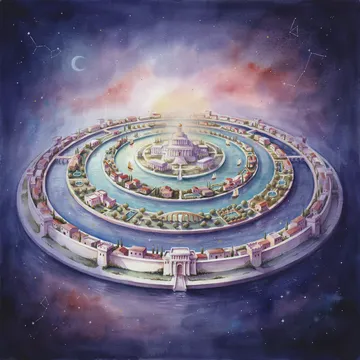
Atlantis Mythology, Plato, and Geographic Speculation

Jason Quitt discusses the origins of the Atlantis narrative, tracing it from Plato to Solon and Egyptian priests. While modern popular culture often depicts Atlantis as a high-tech civilization with flying saucers, Quitt emphasizes the discrepancy between these interpretations and the original source texts. Despite Plato providing specific geographic coordinates in the Atlantic Ocean, researchers continue to speculate on locations ranging from the Azores to the Sahara Desert.

Jason Quitt | The Atlantis Myth, Cosmic Cycles, & Astral Abductions
• 11:57 - 17:15

Jason Quitt | The Atlantis Myth, Cosmic Cycles, & Astral Abductions

Plato's Dialogues, The Timaeus, and The Critias Cliffhanger

Jason Quitt analyzes the structure of Plato's dialogues, noting that the story of Atlantis is primarily found in the Timaeus and the unfinished Critias. He points out the literary irony where Plato cuts the story off just as Zeus convenes the gods to judge humanity, mirroring Solon's own failure to finish the tale. The discussion emphasizes that the Timaeus contains the foundational philosophical and astronomical context necessary to understand the Atlantis allegory.

Matthew J. Bell | Bankers Trust, Nicholas Roerich, & The Mystic Stone From Sirius
• 43:46 - 45:51

Matthew J. Bell | Bankers Trust, Nicholas Roerich, & The Mystic Stone From Sirius

Alchemical Androgyny, The Rebis and Transgenderism

Ancient alchemical traditions emphasize the "Rebis" or the divine androgyne as a union of opposites. This concept, found in Plato’s Symposium and the iconography of Baphomet, suggests that primordial humanity was hermaphroditic. The segment posits that modern transgenderism and surgical transitions may be the literal instantiation of these ancient alchemical symbols through pharmaceutical and medical technology.

Steve & Krys Crimi | Hermes, Inverted Myth, Sacrifice, & Gnosis
• 22:10 - 26:06

Steve & Krys Crimi | Hermes, Inverted Myth, Sacrifice, & Gnosis

Original Sacrifice and Musical Allegories in Plato

The concept of the "Original Sacrifice" is explored as the transition from "The One" to "The Many." Crimey references Pythagoras and Plato's Myth of Atlantis, arguing that these are musicological and geometric allegories rather than historical accounts. He explains that the closer a structure or society is to divine proportions (such as the Golden Mean), the more harmonious and connected to the divine it remains.

Professor Jiang Xueqin | Predictive History, Western Collapse, & The Ivy League Issue
• 30:40 - 34:32

Professor Jiang Xueqin | Predictive History, Western Collapse, & The Ivy League Issue

Education Reform and the Divine Spark in Great Books

Professor Jiang discusses his efforts to reform Chinese education by introducing a liberal arts model focused on individuality and the "divine spark." After failing to implement a Western-style seminar program due to parental resistance, he found success by teaching "Great Books" by authors like Homer, Dante, and Shakespeare to students on an individual level. He argues that these texts serve as a Trojan horse to remind students of their individual agency within a centralized, machine-like society.

Free Plus Show: Peter Mark Adams | Game of Saturn: The Sola-Busca Tarot, Bloodlines, & The Demiurge Deal
• 19:48 - 22:11

Free Plus Show: Peter Mark Adams | Game of Saturn: The Sola-Busca Tarot, Bloodlines, & The Demiurge Deal

Orphism, Neoplatonism, and the Persistence of Hellenistic Paganism

The worldview embedded in the Sola Busca deck draws from Orphism and Neoplatonic philosophy, maintaining a continuous tradition from the 8th century BC through the 15th century. Despite attempts by Christian Emperor Justinian to suppress these ideas, the Byzantine civil service remained imbued with Hellenistic values. This allowed pagan philosophical and magical concepts to survive within the imperial elite for centuries.

orphismneoplatonismplatohellenismemperor justinian
Free Plus Show: Peter Mark Adams | Game of Saturn: The Sola-Busca Tarot, Bloodlines, & The Demiurge Deal
• 24:41 - 28:05

Free Plus Show: Peter Mark Adams | Game of Saturn: The Sola-Busca Tarot, Bloodlines, & The Demiurge Deal

Dark Gnosticism and Controlling the Trajectory of Reincarnation

Unlike traditional Gnosticism which seeks spiritual liberation, the elite designers of the Sola Busca deck utilized Gnostic cosmology to control their subsequent reincarnations. By worshipping specific deities, they aimed to enter those deities' "train" upon death to ensure rebirth back into elite social circles and bloodlines. This practice justifies the multi-generational "long game" often attributed to global power structures.

gnosticismmetapsychosisplato's phaedrusbloodlineselite families
Free Plus Show: Peter Mark Adams | Game of Saturn: The Sola-Busca Tarot, Bloodlines, & The Demiurge Deal
• 49:00 - 52:51

Free Plus Show: Peter Mark Adams | Game of Saturn: The Sola-Busca Tarot, Bloodlines, & The Demiurge Deal

Plato's Ideal Elite and the Concept of Selfless Governance

The study of Plato's dialogues, specifically the Alcibiades, originally focused on how an elite class could govern society justly. Plato's ideal involved an "illumined elite" who sacrificed all personal wealth and property to remain selfless and dedicated to justice. This philosophical framework was intended to create a self-perpetuating mechanism of enlightened leadership through the process of metapsychosis.

platoalcibiadesethicsgovernancemetapsychosis
Patrick Harpur | The Secret Tradition Of The Soul & The Philosopher’s Secret Fire
• 26:45 - 31:18

Patrick Harpur | The Secret Tradition Of The Soul & The Philosopher’s Secret Fire

West African Soul Contracts and the Personal Daimon

The host reads a passage regarding West African beliefs in a "heavenly double" and a pre-birth contract that dictates one's life path. Harper connects this to Plato’s "Myth of Er," where individuals choose a life and are assigned a "daimon" to help them fulfill that blueprint. This daimon, which later became the Christian guardian angel, serves as a protector and guide to ensure the individual stays on their destined track.

Ronnie Pontiac | Remembering Manly P. Hall, American Metaphysical Religion, & The Pagan Pilgrim
• 37:25 - 43:35

Ronnie Pontiac | Remembering Manly P. Hall, American Metaphysical Religion, & The Pagan Pilgrim

Initiate Fever, Transhumanism, and the Risks of New Technology

Ronnie Pontiac describes "initiate fever," a state of ambitious pursuit of metaphysical status that often leads to poor judgment, such as his own experience taking in a "hustler" who claimed to have high-level secrets. The conversation shifts to modern transhumanism, where genetic enhancement and AI integration may create a new class of "elites" that mirror the ancient concept of immortals. Pontiac references Plato’s ancient warnings about the "dangerous" technology of the written word to provide historical context for current fears regarding technological leaps.

initiate fevertranshumanismgenetic enhancementplatoartificial intelligence
James D. Madden | Unidentified Flying Hyperobject, The Uber-Umwelt, & The Cave
• 49:19 - 53:18

James D. Madden | Unidentified Flying Hyperobject, The Uber-Umwelt, & The Cave

Ancient Engineering and the Cosmic Conspiracy

Greg Carlwood introduces the theory that humans may have been genetically engineered by ancient masters, such as the Anunnaki, to be blind to certain frequencies or realities. James Madden acknowledges this "cosmic conspiracy" as a possibility within the control hypothesis framework. He emphasizes that once one admits the existence of the unknown, they must forfeit the assumption of a "happy ending" or a human-centric universe.

annunakisumeriansplato's cavegenetic engineeringcosmic conspiracy
James D. Madden | Unidentified Flying Hyperobject, The Uber-Umwelt, & The Cave
• 1:07:07 - 1:10:30

James D. Madden | Unidentified Flying Hyperobject, The Uber-Umwelt, & The Cave

Post-Interview Reflections on Philosophy and Jacques Vallée

Greg Carlwood reflects on the interview, admitting his initial intimidation when speaking with PhD professors. He praises Madden's application of expertise to "high strangeness" and mentions a topic they didn't reach: Madden's view of Jacques Vallée as an "Oppenheimer archetype." Carlwood muses on the "hyper charade" of modern reality and the layers of "Plato's Cave" that researchers must navigate.

Raw Egg Nationalist | Great Reset Resistance, The Sedentism Sin, & The Microplastic Problem
• 20:42 - 25:18

Raw Egg Nationalist | Great Reset Resistance, The Sedentism Sin, & The Microplastic Problem

Plato's Republic, Agricultural Revolution, First Great Reset

Raw Egg Nationalist analyzes Plato's Republic, noting that Socrates suggested a vegetarian diet for workers to keep them content and manageable. He characterizes the Agricultural Revolution of 10,000 years ago as the "First Great Reset," where a predatory elite forced hunter-gatherers into settled farming. This transition is described not as a leap in evolution, but as a method of social control and taxation.

Adam Green discusses the creation of the Septuagint in Alexandria around 270 BC, suggesting it was a "noble lie" based on Platonic philosophy to provide a foundational myth for the Jewish people. He claims the literal interpretation of the Bible by the masses was intended by the elite to be allegorical, serving as a tool for social cohesion and control. Green also addresses the personal attacks he receives from Christians who label him a "crypto-Jew" for criticizing the God of Israel.

septuagintphilo of alexandriaplatonoble lieanti-semitism
John Hamer & Shannon Rowan | EMF Damage, Ancient Mysteries, & Royal Society Deceptions
• 23:12 - 25:10

John Hamer & Shannon Rowan | EMF Damage, Ancient Mysteries, & Royal Society Deceptions

Plato, Atlantis, Historical Non-Fiction

A brief comparison is made between the accounts of Pliny the Elder and the writings of Plato regarding the lost continent of Atlantis. The authors argue that because these figures were known for writing non-fiction, their accounts of "mythical" technologies or places should be taken seriously rather than dismissed as allegory.

Howdie Mickoski | Reality Resets, NPC’s Among Us, & The Soul Recycling Trap
• 53:19 - 57:15

Howdie Mickoski | Reality Resets, NPC’s Among Us, & The Soul Recycling Trap

Plato's Cave, The Republic and Missing Allegory Elements

Howdy Mikoski analyzes the Allegory of Plato's Cave from The Republic, highlighting what he considers to be critical missing information. He questions the origins of the prisoners, the nature of the war that led to their captivity, and the motivations of the entities creating the shadow illusions. Mikoski argues that the allegory is a foundational description of reality that lacks the necessary details for a true escape.

platosocratesthe republicallegory of the caveglauconprisoners
Tess Clark | The Electric Universe, Comets, Catastrophes, & The Ruling Elite
• 3:59 - 8:40

Tess Clark | The Electric Universe, Comets, Catastrophes, & The Ruling Elite

Ancient Cometography and Elite Control of Natural Phenomena

Tess Clark explains her reliance on ancient historians and "cometographers" who recorded natural phenomena, particularly large comets that passed close to Earth. She argues that elite bloodlines have historically used their knowledge of cosmic weather and catastrophes to manipulate and control the masses. By framing natural disasters as divine punishment or events they could control, the ruling class established themselves as necessary protectors or gods.

cometographersnatural philosophersplinyplatoplanetary interactions
Hugh Newman & Jim Vieira | Giants of Ancient Britain, Geomancy, & Megalithic Sites
• 49:30 - 53:46

Hugh Newman & Jim Vieira | Giants of Ancient Britain, Geomancy, & Megalithic Sites

Lost Esoteric Sciences and Academic Rationalism

The conversation touches on the loss of esoteric sciences such as alchemy, cymatics, and stone levitation due to the dominance of rationalistic academia. Jim Vieira references the Younger Dryas impact event as a potential catalyst for the destruction of a "mother culture" like Plato's Atlantis. They argue that modern science is only interpreting "shadows on a cave wall" by excluding metaphysical and indigenous knowledge.

Dr. Gregory L. Little | The Incredible Edgar Cayce & The Atlantis Readings
• 29:53 - 33:51

Dr. Gregory L. Little | The Incredible Edgar Cayce & The Atlantis Readings

Atlantean Technology and Crystal Power Systems

Edgar Cayce's description of Atlantis includes a timeline beginning 210,000 years ago, far predating Plato's account of its end in 9600 BC. Cayce described a civilization that utilized crystals for communication, heat generation, and the propulsion of dirigibles made from pachyderm skins. While often mischaracterized as having modern computers, Cayce’s Atlantis featured a more primitive, unique form of technical development.