

Monday, 23 September 2024

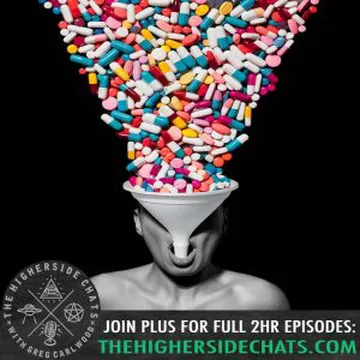
Dr. Roger McFillin | The Chemical Imbalance Myth, Predatory Psychiatry, & Mood Management Industry

A clinical psychologist deconstructs the multi-billion dollar mood management industry and the pharmaceutical marketing tactics that transformed human emotion into a profitable medical pathology.

Chemical ImbalanceSSRI RisksEli LillyAkathisiaConscious ClinicianMedical Freedom
By The Higherside Chats Free Show | 1h 30m listen | 22 chapters
Dr. Roger McFillin | The Chemical Imbalance Myth, Predatory Psychiatry, & Mood Management Industry cover

About this episode

Dr. Roger McFillin and Greg Carlwood expose the predatory architecture of the modern mood management industry, tracing the current mental health crisis back to the 1987 FDA approval of Prozac. The discussion details how Eli Lilly and Pfizer utilized direct-to-consumer advertising to transform normal human suffering into a medicalized 'chemical imbalance' narrative. By examining the political ties between the Bush administration and pharmaceutical giants, the report reveals a long history of suppressed clinical data and regulatory capture that prioritizes corporate profit over patient safety.

Secondary investigations into the SSRI pipeline uncover the suppression of akathisia data, a neurological condition linked to suicidal impulses that affected 38% of trial participants. Dr. McFillin highlights the 2022 systemic umbrella study by Dr. Joanna Moncrief, which scientifically debunked the serotonin deficiency theory, yet over 80% of the public remains under the influence of this marketing myth. The analysis extends to the dangers of Post-SSRI Sexual Dysfunction, the 1998 Phil Hartman tragedy involving Zoloft, and the David Carmichael case where genetic metabolism variations led to toxic psychosis. Primary care physicians are identified as the frontline distributors of these substances, often relying on invalid screening measures to pathologize anxiety and depression in both adults and children.

Dr. Roger McFillin introduces the Conscious Clinician Collective, a new non-profit directory designed to connect patients with medical professionals who prioritize informed consent over pharmaceutical indoctrination. The conversation takes a sharp turn into the legacy of MKUltra, suggesting that the industrialization of therapy through apps like BetterHelp may serve as a tool for population apathy and social control. Between reflections on the 'disability culture' of social media and the ethics of AI-generated music, the episode serves as a manual for reclaiming mental autonomy in a society designed to keep its citizens medicated and compliant.


CHAPTER 01 / 22 Discussion

Predatory Psychiatry and the Pathologizing of Human Emotion

Greg Carlwood introduces Dr. Roger McFillan, a clinical psychologist and host of the Radically Genuine podcast, to discuss the "mood management industry." The conversation focuses on the cultural engineering operation that pathologizes basic human emotions and encourages the widespread adoption of mental illness labels. McFillan’s work through the Conscious Clinician Collective aims to provide a network for medical professionals who challenge mainstream psychiatric indoctrination.

roger mcfillan· predatory psychiatry· mental health industry· radically genuine· conscious clinician collective

00:02 You're about to start the free-force now I'm a higher side chat show And before we get too deep into it There's a couple things to know The shorter version proves love for you It lays out what we can do It's just about an hour long But imagine how or two A pleasure baby, it's time To double your fun The planet's crowded and monsters almost surely have a plan There clearly may be something there beyond the realm of man And until we've thoroughly tested every last close chest of you I'll find the more we think, will know the less we really do We're without THC Because we know they're lying to us Just don't know what to do Without THC

01:29 The higher side chat show Greg Carwood and company Serenity, now higher side chatters doing the dance from the sunshine state. I'm Greg Carlwood and while we might spend a lot of time deconstructing the UFO disclosure movement worrying about the potential of a world war daydreaming about a free energy reality

02:07 or speculating about what might be the next big psy-op rolled out by the Capstone Cabal, there is an insidious operation already in full swing that really isn't getting as much attention as it should. And that is what we might call predatory psychiatry, the mood management industry, the pathologizing of basic human emotion and the widespread voluntary adoption of various mental illnesses in a bizarre cultural engineering operation to make being irregular, unmedicated, neurotypical somehow undesirable. Across the cutthroat capitalistic chessboard we see almost every industry radically oversell and underdeliver their own products and services while finding their own symbiotic role to play in the big machine

02:51 But most people's skepticism of insurance companies, energy providers propaganda spewing politicians compromised corporate media education and fiat currency corruption stops short of also applying to the strong suggestion they might be anxious or depressed and whatever is filling up their medicine cabinet to go along with it. Well, today's guest Dr. Roger McPhillan beats this drum as well as anybody he is a clinical psychologist with over two decades of experience who is on a determined mission to expose the harsh truths about the mental health industry that others avoid or overlook And he does this usually through his excellent podcast, Radically Genuine. He also writes on Substack and is the mind behind The Conscious Clinician Collective, a network and database of like-minded medical professionals for those of us who are sick of sifting through the indoctrinated options we typically find. You should fit in nicely around here so let's do it! The chemical and balance critic, mood management industry exposer, and always radically genuine Dr. Roger McFillin welcome to the Higher Side

CHAPTER 02 / 22 Discussion

Prozac Approval and the Shift in Mental Health Narratives

Dr. Roger McFillan traces the history of modern psychiatry back to the 1987 FDA approval of Prozac, noting a dramatic shift in how society views suffering. Before the 1990s, difficult emotions were viewed as normal signals for life changes, but direct-to-consumer advertising transformed these experiences into medical diseases. The discussion highlights the "chemical imbalance" narrative as a marketing tool used to create lifelong drug dependency without objective biological measurements.

prozac· fda· eli lilly· serotonin· chemical imbalance myth

03:55 What an amazing opening. I couldn't have done it any better than myself! Ah, too kind It's really a privilege to be on here and I'm really thankful and grateful that you're willing to address this issue. Not a lot of people are willing to walk down this kind of avenue, so I think we have a lot to talk about today. Yeah man thanks for doing this! Sometimes guests and topics arrive in strange ways... And this came from a listener tweeting at me to ask if we had any deep dive episodes on SSRI's and this slice of the big Harma pie And we make a lot of offhanded comments about this and that, but a deep dive with an expert in the field? No not really. And you were suggested as a way to fix that

04:37 But like I tried to say in that intro, this might not sound as epic and exciting as some of the other topics we get into. It is probably affecting people in our circles more than most things we might talk about so that's the weird irony but that's probably because it has been normalized and a lot of marketing has erroneously been accepted as settled science wouldn't you say? That's a huge part of this Without a doubt. I mean, it's interesting because I think a lot of your audience is probably very mindful and aware that You know, the narrative about history—the privilege tends to support those who are in power. And there is certainly a narrative about pharmaceuticals and a narrative about psychiatric drugs that is heavily supporting of the pharmaceutical industry because they have a web of influence on government and media that has created a collective consciousness about how we understand

05:33 just the process of what it means to be a human i mean that has been such a manipulated marketing propaganda machine. That really is social engineering as you mentioned earlier that has altered the way that we understand, what it means to kind of go through life and go through this struggles living purposely driven people to doctors to seek out prescriptions and i think the outcomes are absolutely horrific When you start looking into the history of how SSRIs came to market, it's really a black hole. You keep going deeper and deeper and deeper, and you find a lot of published evidence that supports it. I think part of my job right now is to

06:17 be able to communicate things to the general public who aren't aware of a lot of these facts and we think that these drugs are relatively benign at best, they're anti-depressant or they have some positive effect on mood. And before you know it there in this horrible cycle of drug dependency and among other horrible consequences. There's a number of things that occur in popular culture that we don't speak enough about, which include violence from use of these drugs school shootings and number the things that have increased dramatically since the 1990s when we made these drugs widely available and push them into primary care so I think the place to start not completely direct the conversation but the place to start is kind going back to 1987 when Prozac

07:03 was first approved by the FDA. By my age, I'm 48 years old so i have a unique place in American history where I can see the dramatic shifts that have changed and the way that we talk about mental health from when I was a kid to where we are now as a professional now is a clinical psychologist I mean, for me going back to the 80s and growing up this is prior to cell phones. Prior to the Internet it was rare that you would come across somebody who was like severely depressed. It wasn't discussed in popular media there was a normalization about the struggles that existed. You know people went through very difficult and hard times maybe they were economically related. You went through loss and breakups maybe things weren't working out for your career wise or within school people struggled

07:52 But it was always kind of communicated as a normal part of living and potentially even just a transformational process. Like this is something you go through and you need to face it, your emotions... We had much greater vocabulary for emotions than what we do now. You know, emotions were just signals for something you'd pay attention to. If you're anxious, you're anxious for a reason if you were sad, you are sad for a reason. If you struggle there's a reason you figured out what that reason was and you faced it and you overcame it. And as you matured and you get older, you look back at certain times of your life and you realize that sucked but it was probably exactly what I needed to be where I am now. So the version, the narrative of what mental health was and what depression was completely different until the 1990's

08:43 and direct-to-consumer advertising. The United States is one of two countries, us and New Zealand where the pharmaceutical companies can directly advertise to the American public and they made psychiatric drugs a multi billion dollar industry And so my curiosity really was triggered by my experience here as a clinical psychologist seeing so many people placed on one or more mind-altering, mood altering psychiatric drugs. The most prevalent being antidepressants and seeing so many people harmed and seeing the brainwashing that occurs you know you do an evaluation of somebody severely depressed And they've been on an anti depressant drug for five ten years right? And you ask the question

09:36 If you're so depressed, why do you keep taking the drug? And they say well I would feel much worse if I didn't. And I said how is that possible? You want to kill yourself it's hard to get out of bed, you're miserable, you're hating life, you just following the same routine. It's like if we had strep throat and someone give us an antibiotic and with a strep throat for 10 years we keep taking the antibiotic because were afraid its going to be worse. That's kind of manipulation that has occurred throughout that history is we don't trust ourselves anymore and we rely on these doctors to tell us that, hey there's something wrong with you. You've got this disease a disease you can't measure it like you go to the doctor and they give you a depression swab. They push this chemical imbalance narrative that there's something internally wrong with your brain. There's no measurement of it

CHAPTER 03 / 22 Discussion

COVID-19 Vaccine Messaging and Pharmaceutical Marketing Parallels

A comparison is drawn between the marketing of psychiatric drugs and the messaging used for COVID-19 vaccines, specifically the claim that a condition "would have been worse" without the intervention. This rhetorical strategy is identified as a way to prevent consumers from questioning the efficacy of products like Zoloft and Prozac. The timeline of SSRI introduction by Eli Lilly and Pfizer is established as the foundation for normalized pharmaceutical reliance.

covid-19 vaccine· pharmaceutical marketing· pfizer· zoloft· eli lilly

10:25 And so that is part of the greater push. And you have to go back to kind of 1987, to start this discussion. Mm-hmm yeah that is a great introduction I agree with some many things you said there are a lot of times it's like look You should think about, are you depressed or are you in a depressing situation? Before I had this show my wife would be brought to tears. My then girlfriend she's like, I don't know if you're ever going to be happy and i'm like well if i'm spending 50 hours a week at this job that I hate I might not be happy. And that's scary, and that's scary for a partner to be with someone but i was like look...I got to be radically honest about it! That's a lot of my time, a lot of my day at a job I hate so yeah if I don't figure it out I'm gonna be miserable now the alternative would be just to keep that job not take any risk and take a pill to suppress that negative feeling and that's obviously the situation a lot of people are in but

11:22 I also wanted to just double down on what you said about, well, I would feel worse. The situation would be worse without the drugs. That's what they told us during COVID. They said, You get this vaccine now we're already going to get this kicked off YouTube or barely even into it. Had to bring it up but the messaging was you get this vaccine? You might still get COVID but It would be way worse if you didn't have the shot and it's like you don't know that! You can't ever compare a reality to a potential that we just don't have that data. So it's just a silly thing they say, it is marketing but yes I do always love when we are dissecting something that has become an assumption in our society some kind of theory that's now presented as like the absolute truth

12:08 You just reverse engineer because you start to ask people, well are you sure that you can trust that? Are you sure that's a true thing that you believe and a lot of time the best way to unpack it is to go back to how did this get introduced into the system. And as you say 1988 that's when Eli Lilly & Company put out Prozac 1991 is when Pfizer brought up Zoloft so 88, 91. This is the window of time just a few years where they're trying to figure out how they can market this stuff and take it from there. Take us through the story and how this became kind of normalized when really it wasn't before? Yeah I want to give credit to the work of physician by the name of Dr Peter Bregan

CHAPTER 04 / 22 Discussion

Clinical Trial Manipulation and the Suppression of Akathisia Data

Dr. Peter Bregan’s research into the discovery process of lawsuits against Eli Lilly revealed that pharmaceutical companies suppressed data regarding dangerous side effects during SSRI trials. Approximately 38% of trial participants experienced a "stimulation effect," ranging from agitation to akathisia, a neurological condition that induces suicidal impulses. To hide these effects from the FDA and outperform placebos, researchers administered benzodiazepines like Xanax to sedate trial participants.

akathisia· peter bregan· eli lilly· clinical trials· benzodiazepines

12:54 who was a medical expert who's testified in malpractice, criminal and product liability lawsuits. So him being an expert, a witness and authorized to kind of evaluate the scientific basis for Prozac initially he was exposed to the discovery process so the discovery process in lawsuits allowed him to get access to company emails memos and the relationship between the pharmaceutical company Eli Lilly and the federal government. And so some things were very, very clear from the clinical trial process with SSRIs this drug when they went through the initial trials and they were investing millions of dollars in this process that two things were happening first of all

13:49 About 38% of the population who was placed on the drug was exhibiting what we call a stimulation effect. And that stimulation effect was quite vast, so it was on a continuum of intensity and severity. On one end it would just be increased agitation or anxiety and maybe insomnia But on the other end, it was a condition called akathisia which is an inner restlessness. A medical condition, a neurological condition that makes you want to kill yourself. The people who I've interviewed who have been exposed to akathisia as a drug reaction describe it in ways of like wanting to rip their skin off like this inner restlessness inside so obviously it makes you want to die

14:39 It also amplifies thoughts that we're all subject to, but it amplifies them in a way that feels almost delusional. Somewhat psychotic like you're attached to it and so they knew that right away and they began to suppress that data So they would remove those people from the drug trials They would label them as worsening depression emotional lability And they would continue with constructing trials. And what they found out is the placebo group was doing as well, if not better than the drug group. So of course a drug cannot come to market unless it outperforms a placebo drug. The other thing about a drug coming to market it has to be treating a medical condition so you have to construct a narrative too around depression being biological being medical

15:34 And so that's part of the greater story which we want to get into. So Eli Lilly, and there was documents memos from some of the leadership who were overseeing the trials is they administered what's called a benzodiazepine. Many people know it now as like Xanax or Klonopin. It's kind of like a tranquilizer. Those who are experiencing that stimulation effect, they administered a benzodiazepine in order to calm them down and they kept them in the trials. They did not initially disclose that to the FDA, Wow! In order to be able to create that difference between placebo

CHAPTER 05 / 22 Discussion

FDA Approval Process and the Failure of Long-Term Safety Studies

The FDA approval process for antidepressants is criticized for requiring only two positive studies while allowing companies to hide numerous failed trials through publication bias. Most clinical trials for these drugs last only six to eight weeks, failing to account for the long-term consequences of manipulating brain chemistry. The "serotonin deficiency" theory is described as an unproven hypothesis sold to doctors and the public to justify treating depression like diabetes.

fda· clinical trials· publication bias· serotonin deficiency· placebo effect

16:15 The other thing that I think people maybe are not aware of, your government does not protect you from medical harm. Don't think for a second that the FDA's job is to protect us. They will not protect us! Their job is to get those drugs to market as quickly as possible. Most of these drug trials they are not studied long term so...I mentioned earlier that my patients have been on these drugs for five to ten years do you know how long the clinical trials were? For antidepressants I kind of do. I know they're pretty short, 90 days or so? Usually about six to eight weeks on average and so there's some important things to know about just the emotional state of human beings we've all struggled they tend to be temporary they tend to be episodic So we know that people are just naturally going to be able to overcome a depressive episode when we face it. That's like one important thing people always ask me

17:10 Well, what about all the people who said they got better after they took an antidepressant drug? Well there's lots of reasons. I mean the placebo effect being one of them it's an active placebo when people take the drug they know that they're taking the drug also There is an expectancy effect when you start viewing your condition as something medical and you start interacting with a doctor That expectancy effect actually leads you to start feeling better So just a lot of reasons why people may feel better after seeing a doctor and taking a drug that have nothing To do with the drug But it's very important for everyone to know that the clinical trials themselves did not necessarily demonstrate that this drug outperformed the placebo. And the FDA only requires two positive studies, so you can do 15 studies with 13 of them failing

17:56 And you can submit two of those studies to the FDA and that can receive approval. You can also go ahead and just publish those trials, then in file drawer the rest of them – that's called publication bias. So you see you're starting to build the narrative that this drug outperforms placebo, You're withholding the data that induced suicide, agitation, akathisia. You don't study the long-term effect of manipulating the brain in a way that you did so you're not going to be able to communicate the long term consequences of it and then you sell a theory. The theory being that we've identified depression to be related to a serotonin deficiency, that it is a medical condition like diabetes and this is like insulin for diabetes, and you start to sell the narrative! And the narrative is pushed onto the American public throughout the 90's but really it sold to doctors. So doctors can do that work It's sold to mental health professionals, it's sold to therapists, and you really communicate it

18:58 to the general public, which spreads across the Western world. Drug companies also are powerful in the manner of which their advertising dollars impact media and so you're influencing the story as it's being sold on nightly news in print media and you're also funding like small spots in popular American television where Language is powerful. So you start sharing these things in exposure through lines with popular sitcoms and movies, I remember it's like this start like someone's acting crazy or erratic you say well they're off their meds and it becomes part of our cultural consciousness and the use of lexicon if someone's erratic

CHAPTER 06 / 22 Discussion

Political Influence of Eli Lilly and the Bush Administration

The 1990s investigation into Prozac-induced suicidality was reportedly stymied by political ties between Eli Lilly and the White House. George H.W. Bush had previously served on the board of Eli Lilly, and Vice President Dan Quayle represented Indiana, the company's headquarters. Despite warnings from FDA physicians, regulatory warnings for suicide were suppressed during this era to protect the drug's market growth.

george bush· dan quayle· eli lilly· fda hearings· prozac

19:46 They're crazy, there's something medically wrong with them but they're stable and they're great as long as they're on their meds. And we start normalizing these medical conditions to be treated. One other thing about Prozac for example I think this is fascinating again I want to give credit to Peter Bregan who's the one who's uncovered this one of his seminal books is called The Antidepressant Factbook and he tells a story in the early 1990s when the FDA is flooded with these calls and reports of increased suicidality and medical problems, people worsening after taking the drug Prozac. So they have to then open up an investigation again and they look deeper into the data and they discover that

20:32 Eli Lilly took the group who had those agitation, the stimulation effect and they put them on benzodiazepines. And it was the use of that benzodiazepine that probably pushed them over the edge for the drug approval In the White House at that time was George Bush and his vice president was Dan Quayle. George Bush, earlier in his career, was on the board for Eli Lilly and Dan Quayle was from the state of Indiana where Eli Lilly's home headquarters were at the time—I'm not sure if they're still there. They also had a number of former employees from Eli Lilly on staff so they kind of ignored it

21:13 They ignored other FDA physicians who wrote reports and there were hearings on the drug concern. They pushed it through anyway without a regulatory drug warning for increased suicide at that particular time, and so then of course it's now pushed into the American public... And still into the early 90s, it wasn't a great selling drug And that's the thing about this continued story about depression to where we are right now is that you have to increase the prevalence of disease to be able to increase the number of customers and of course, your beholden to your shareholders and you need some more of the drug so as you would expect most people aren't going to take

21:55 a drug when they're feeling poorly, it seems very experimental. Especially at that time from where we were culturally the only way you're going to get people to take that drug is if there is a really concerted effort and I call brainwashing because its brainwashing effects in order to normalize it You have to be able to minimize any of the negative consequences for it and you have to really get doctors on your side And then thats the story of getting primary care involved And I've heard you talk about how in recent years, they've actually gone back and looked at a lot of this did a meta analysis, a meta study of all the data and all the studies that were published that this kind of stuff is based on. They found a lot of problems but they really put to rest the chemical imbalance myth as you've called it. This is one of the most important things because

CHAPTER 07 / 22 Discussion

Debunking the Serotonin and Chemical Imbalance Theory

A 2022 systemic umbrella study by Dr. Joanna Moncrief is cited as definitive proof that serotonin levels are not correlated with depression. The discussion emphasizes that SSRIs do not correct an imbalance but instead induce a chemical abnormality that can lead to chronic depression and metabolic illness. Despite this scientific debunking, surveys suggest that over 80% of the American public still believes the debunked chemical imbalance myth.

joanna moncrief· serotonin· chemical imbalance· metabolic illness· drug dependency

22:53 as we're talking about, this is the foundation for making your emotional state a medical condition that needs to be medicated. Well for people we might encounter even if listeners are like yeah I'm already keeping Big Pharma at arm's length i already know what i need to know kind of even without all the details there's going to be people in our lives that are still adopting the old lie. This is in so many different areas of life, but what would you say to us to arm us to point people towards the good information? The new information that shows that this has been debunked and this isn't real. I'm glad you brought that up Greg because have seen recent surveys that suggest that still 80-85% percent of the American public still believe that depression is associated with

23:42 chemical imbalance or low serotonin. And there's good reason for that because if you Google it, You're going to see websites that are propped up by the pharmaceutical companies. WebMD is a great one, so I've done some presentations where i show people on how depression is promoted from WebMD they say things like it is believed to be an underlying neurological condition related to key neurochemicals right? So that's to push the drug that artificially increases the availability of serotonin in the nerve cell So, Dr. Joanna Moncrief who is a psychiatrist out of the UK who's done a lot of work in this area in 2022 published a systemic umbrella study on serotonin and depression bottom line is this Serotonin which is very complicated as is the brain as is the whole entire system biologically it's not associated with depression whether its low serotonin that's measured in blood or within spinal fluid

24:45 Low serotonin, average serotonin, higher serotonin. It's not correlated like there is no relationship at all it just was a theory and of course theories have to be proven scientifically that was never proven scientifically so the greater question is well what happens then when you artificially induce a neuro key neurochemical that affects the entire system and brain development and endocrine system What happens when you artificially, through a chemical compound increase the availability of serotonin? Well there's a lot of downstream consequences. The easy thing to say is that these drugs do not correct an underlying chemical imbalance they induce one themselves and so then the downstream consequences are quite severe and it's kept out of the general public it can range from worsening depression

25:41 making a depressive episode more chronic and even more severe. It can lead to violent suicide my current standing in trying to understand like the relative increase in suicide or non-suicidal self injury from taking a antidepressant, I believe it's a five to six times amount compared to a placebo group. So these are very serious drugs that have serious consequences and they also have a range of health consequences too inducing metabolic illness like the longer you're on it the more problematic it is they create dependency people have a hard time

26:20 getting off these drugs and all because they were sold the lie that it corrects an identified imbalance in a brain chemical. Yeah, it's like serotonin is the one chemical they used to assess a very complex system. I'd say there was an analogy to CO2 and the earthly environment. It's like here's this big complex environment we're going to isolate one thing and this will be our single metric to assess the health of the entire system whether it's the environment or your head. And it's just simplistic thinking that helps

CHAPTER 08 / 22 Discussion

Primary Care Doctors as Legalized Drug Dealers

Primary care physicians are identified as the main distributors of psychiatric drugs, often acting as "legalized drug dealers" due to a lack of specialized mental health training. These doctors rely on invalid screening measures to pathologize normal human anxiety and move patients onto pharmaceutical protocols. The "safe and effective" mantra is described as a standardized playbook used to push SSRIs as frontline treatments for nearly any mood-related challenge.

primary care· ssri· screening measures· medical protocols· pharmaceutical influence

26:58 It's problem, reaction solution. Here's the problem we've identified it and then we've got the solution here for you." So I wanted to ask about today because the drugs that this whole thing started with are maybe not the most popular drugs today still and also...I'm just so ignorant of this because I keep it all away but like the difference between benzos and SSRIs. I hear there's SSRIs, and then there's another thing like it. What are the most common drugs that people are on today? Because so often...I'm pretty sure I've heard the commercial say take this for anxiety or depression. It's like well anxiety OR depression those aren't even the same thing! So are they prescribing different drugs for if you're a depressed person or anxious? And what

27:42 popular drugs and ones you consider maybe the most dangerous to be on? They're all very dangerous. So when I say there's no safe drug, I want to be able to communicate that clearly there is no safe drug. There are drugs that are safer for a large portion of the population but they affect people differently. They're often not evaluated long-term The most widely prescribed drugs from my vantage point, from what I understand still are the SSRIs because they are prescribed for conditions that they've never been evaluated for.

28:20 We see them for anyone who is experiencing any mood-related challenge or anxiety, which is almost everybody. Being human means that you're going to struggle and being human means that you're going to feel anxious so when you medicalize it as a symptom to drug well, you go into your primary care doctor just for an evaluation. They are handing out these screening measures now and the screening measures are not valid constructs of any real mental health condition they're just used to identify more people with clinical conditions of depression or anxiety in order to push their drug and primary care has become really a legalized drug dealers for the pharmaceutical companies I mean they have

29:03 really no background or training in mental health at all. But what they're doing is they are following these protocols that are pushed from the federal government, that are pushed through major medical organizations and they misrepresent the science base in order to identify these drugs as frontline treatments, safe and effective. We've all heard this it's the same playbook that was used post-COVID words like safe and effective and you have so many of the doctors just repeating the narrative over and over again So the last I look—and this is shocking right now about 25% of adult females are on NSSRI

CHAPTER 09 / 22 Discussion

SSRI Risks for Pregnancy, Autism, and Sexual Dysfunction

The widespread use of SSRIs among women—estimated at 25% of the adult female population—is linked to increased rates of miscarriage, birth defects, and neonatal drug dependency. The discussion also covers Post-SSRI Sexual Dysfunction (PSSD) and emotional blunting, where patients lose the ability to feel joy or achieve orgasm. Additionally, the trend of prescribing ADHD stimulants like Adderall to counter the fatigue caused by antidepressants is highlighted as a dangerous cycle of over-medication.

pregnancy· autism· pssd· emotional blunting· adhd stimulants

29:43 I mean, one quarter of the female population being exposed to antidepressants. And there's so much that we don't talk about. There is a bit of an awakening post-COVID and that's kind of the blessing in all of this is that people are more aware of the corruption as the veil has been lifted But we talk about the dramatic increases in chronic illness, we talk about the dramatic increases in autism. One of things that we don't talk about enough is like alright what happens when a woman becomes pregnant and she's taking an SSRI where serotonin is really critical in fetal brain development? And women who are taken an antidepressant have dramatically higher rates of miscarriage

30:29 giving birth to a child who has neurological disorders and conditions such as autism, you are giving birth to a baby who is now addicted or dependent on the drug that was provided to the mother. So there's so many complicated aspects of this that once we started pushing SSRIs into really the general population, you see an absolute increase in a lot of problematic health conditions. Now no one is really making the link between let's say gender dysphoria and the use of SSRIs when there is a link and there's a bidirectional relationship between

31:07 serotonin, and key hormones that are part of development. And the one thing about what happens—and there's a large global movement against psychiatry and the pushing of a lot of these psychiatric drugs from harmed patients—and one of them is what's called post-SSRI sexual dysfunction So, if there's any positive effect that could be perceived as positive for someone who is in a high emotional state of pain would be these drugs do induce emotional blunting in a portion of the population. There's great variability and how people respond to this drug so

31:44 And some people just feel absolutely numbed out, blunted. Don't experience any emotions not even joy like they don't even care they feel nothing anymore it's caused problems in marriages and relationships and so forth we can get into that but what it does do is also numbs the genitals and it leads to the inability to achieve orgasm, and for a portion of those people it resolves itself once they get off the drug. But it also has a permanent effect on a percentage of population that's harmed group of people who are angry and who are very vocal on social media right now. I think the other drug that is really popular in being prescribed haphazardly is, as you would expect, stimulant drugs for ADHD. So these are forms of meth like Adderall that have a very sometimes very experienced positive elation improves your focus and your mood for a period of time

32:44 And so if somebody's on one drug and it might induce some blunting or, you know, some fatigue or even difficulties in sleeping or a number of effects. Doctors will prescribe a stimulant too whether or not they're deemed ADHD which is a problem in itself as a drug just for the side effect of the other drug that they're on So I mean we're just mass prescribing all these mind and mood altering drugs to even younger and younger populations where it's much more risky because of where they are in development Right, and there is an element of cultural shaming involved with the rest of us. The people who are aware of this corruption

CHAPTER 10 / 22 Discussion

Social Shaming and the Therapy Pipeline for Mass Shooters

The conversation explores the social pressure to defer to "experts" regarding mental health, which prevents friends and family from questioning psychiatric interventions. A pattern is suggested where troubled individuals are funneled through a therapy pipeline that leads to psychiatric drugging and, in some cases, interaction with federal agencies like the FBI or CIA. This segment posits that certain therapeutic environments may inadvertently or intentionally create "patsies" for violent events.

mass shooters· therapy industry· fbi· cia· social shaming

33:23 We're not supposed to talk about it to our friends and family because we're not experts. So if we think were skeptical about their drugs, like well who are you to tell me about my depression or my anxiety? You don't know anything and its just really disturbing because I have so many examples and its funny that you say 25% of women because I think about my wife's friends, my buddies wives people in my family All women, I know about maybe a dozen or so people who have been affected by this either with a brain bleed or the sexual issue. Or just radical behavior that one of my buddy's wives did something very drastic

34:09 something that would shake the foundations of trust in a marriage. And he's like, well I know she just switched her medication and it's just that and if we can get her back...and it's like that's a big freaking deal! People just kind of roll with that medication thing they idea that oh we're just gonna have to try six or seven things and you might be radically depressed, you might be suicidal well then surely we're gonna have to switch that drive your family halfway across the country while a man is at work and take his kids. Crazy stuff happens, and of course the craziest extreme is the shooters I'm the guy who's going to bring up the shooters of course but it is the context that we talk about these drugs in most often around here And It makes me skeptical of like The whole therapy industry because

35:02 When you check the boxes of these shooters, it's like well they tend to be in therapy and that's how they get on these drugs. And they oftentimes have already had some interaction with the CIA or the FBI and it starts to seem like there are certain therapists that feed these troubled kids to the agencies They give them access to weapons and equipment they can't reasonably afford, let alone handle so they can be patsies in this situation for some other purpose. But what are your thoughts on like some kind of pipeline or relationship between a network of therapists and intelligence? And like taking vulnerable naive people and putting them into a situation like I feel like we've seen it dozens and dozens of times

CHAPTER 11 / 22 Discussion

MKUltra Legacy and Apathy as a Population Control Tool

The historical context of MKUltra is used to frame modern psychiatry as a potential tool for social control and population management. By inducing emotional apathy and drug dependency, the state can create a fragile, easily manipulated citizenry that lacks the "emotional gift" of anger necessary to resist injustice. The transition from self-efficacy to reliance on medical authorities is described as a psychological operation to neutralize political dissent.

mkultra· population control· apathy· drug dependency· government propaganda

35:52 enough of a pattern, you start to wonder like what is really behind this? Talk to me about your thoughts on some of that. Yeah these conversations can be very disorienting for people they've always trust certain things to be true and there's safety and there's comfort in that You know the challenges for me was trying to understand some of the relationship between U.S government intelligence agencies and mainstream psychiatry and psychology And there was I don't know if you've heard of MKUltra, I'm sure you have. Too many times! The US intelligence agencies have a real vested interest if not just in our own people but in countries around the world to be able to use these advanced techniques to be able to influence populations' perceptions right? To make them whether it's more controllable or for regime change

36:51 create influence and so that's a complicated area where i've just started to investigate it more and the relationship to academic universities in psychiatry around the country. I become very skeptical about the pushing of the psychiatric drugs is something that is very much intertwined with government propaganda used to influence a population. You know, the one thing about psychiatric drugs in general is they tend to induce a degree of apathy and then dependence on the expert or the authority

37:32 which makes people easily controllable. You know, that's the problem with mind and mood altering drugs is once you start them even very early on is that the body seeking out homeostasis begins to adapt to it and you need more and more of the drug just to achieve the same result And before you know it, you're hooked! You miss a dose...you start to get off the drug...you feel like shit...You're going through withdrawal symptoms....and before you know it just like Somebody addicted to street drugs, you need your dealer. And in this greater system the sick care system that exists then you need your medical professional and it was interesting I recently just wrote a Substack article where I broke down some of this propaganda one of them was the Zoloft blob commercial from 2001

38:27 And it's fascinating about the messages in there which again are pretty dramatic shifts that now have affected generations where generations probably wouldn't even understand that they were under mind control techniques. One of them was kind of the first time saying only a doctor can diagnose depression so its funny because depression and the way we label is an emotional state How does a doctor then diagnose something that is an emotional state or something that's within the mind? The doctor is only going to know what you reveal to them. So automatically right there it undermines our own self-efficacy, so I mean what does that mean if you're like going through a hard time and you're struggling

39:10 It doesn't exist unless a doctor labels it. You know, as I mentioned before there's no blood test, there's no depression swab you're not going under an fMRI to be able to determine if you have a chemical imbalance but now you're creating this dependency on the medical authority which is strongly conditioned that i go to the doctor and the doctor saves me in the doctor helps me and... The modern allopathic medical system in United States is about prescription drugs right so we know that tied industry its certainly increases the number of people who are going to be on these drugs, it's a multi-billion dollar industry. But what's the downstream effects of all this? Can people be used? Is it easier then for the government to manipulate us if we've lost our sense of self efficacy to use our emotions for our own benefit?" Listen, if you're angry about something and there's a lot of aversive emotions that you experience especially when

40:06 When you feel like there's injustice or you feel like the government is not serving the best interests of the people, the rise up of a population is an emotional state of people coming together. Well I mean what a mindfuck to tell people that what they feel so invalid it's just something wrong with them? It's not about unemployment. It's not about what we're paying in taxes. It's not about the fact we're being divided, that our government doesn't serve us but they serve a military industrial complex around the world. Like we're paying for wars and so forth or what's going on in California where they can take your money and then give it to illegal immigrants who come across whatever that is right? If you just don't give a shit anymore if like you just kind of numbed out on drugs and we are a population that is kind of being pushed to drugs well you're apathetic about it You're less willing to resist

40:55 So there is certainly, in my opinion a connection to trying to drug up a population. To create fragility in the population. To control a population Do I need to get more information about what that actually means? I did look through some of the information that is public about MKUltra. It was a legitimate operation, it's written about right well to what extent have they used that information to control us and i think we have to think about it that way so one of the things that i'm speaking out against as a psychologist, is to say hey your emotions are gifts for you to use. They're not symptoms of an illness that's a psyop these emotions are gifts you need to understand them and face them yeah life is hard but you are fucking resilient

CHAPTER 12 / 22 Discussion

Resilience Culture versus the Rise of Identity-Based Disability

A shift in American culture is noted where historical resilience is being replaced by a "disability culture" that encourages young people to seek out psychiatric diagnoses. The discussion links identity politics and inherent guilt to the increasing number of individuals identifying as "neurodivergent" or mentally ill on social media. This trend is viewed as a form of mass conditioning that externalizes solutions to life's challenges rather than fostering internal strength.

resilience· identity politics· adhd· disability culture· mental illness labels

41:44 It's in your DNA and you're an American too. Somebody here, in your country some of your ancestors had to leave their homeland to start anew right? Life is really really hard You know we can easily go get our food from the grocery store right now put on Netflix We have a certain quality of living in the United States but it's not always been that way This is a country of immigrants. This is a country of people who have struggled, who have gone off to war, who've had to deal with the Great Depression, famine and number of other things. We deal with that stuff well we overcome it and then serves our life this is a unique period of time where we are manipulated and fragilized and were being pushed to go to the doctor so you go back to those commercials

42:30 where it says only a doctor can diagnose depression. When it says things like, when you know what is wrong you can make it right. Oh, you know what's wrong? It's a serotonin deficiency! It's not the fact that you can't find work your wife just left you or other myriad of legitimate problems that you might face over the course of your life No, it's a chemical imbalance. That's what's wrong with you and a doctor can make it right. I mean, that's such a mindfuck when you start to think about it how we've been mass conditioned to see it that way. And you know, what's fascinating is the literature in my field and like I'm interested...I'm a clinical psychologist. I'm interested in how do people overcome challenges? How do they overcome depression? How do they overcome fear if they're abusing alcohol or drugs or have an eating disorder or at some point in their life they feel hopeless or they've been traumatized and there's a post-trauma reaction. I want to know who overcomes that and how

43:27 Because that's the blueprint of a mindset, of a way of living. And when you take away that kind of narrative in our culture of resilience and you discuss it in terms of a disability that someone has or a condition they have to manage, you're essentially saying that your solution to all that is external. And then when you also reinforce a disability culture which we do, right? Like we talk about anyone who has a degree of success. It's related to these identity characteristics which is pushed in public schools as part of the propaganda you know You're not successful because you have talent or you work hard. You're a white man! That's why you're successful Greg and it doesn't matter if there's minorities are African-Americans who are multi billionaires We can't have this conversation because

44:26 Your success in life is based on these identity characteristics. Therefore, if you are of the majority culture, if you are white there's an inherent guilt that's pushed so you see a lot of white young people, white women, young white girls, white men who feel guilty about who they are and are now seeking out psychiatric diagnoses it's the oddest thing and it's a consequence I think of its mass conditioning well I have ADHD that's why I'm struggling I have mental illness That's a shock. I mean, if anything you would not want to be in life labeled as mentally ill but we're at that point where people are monetizing it on YouTube channels and social media It is quite nuts! Wow so many great things there. We found our social media clips with that rant there

CHAPTER 13 / 22 Discussion

Cognitive Behavioral Therapy and the Risks of Repressed Memory

Dr. McFillan advocates for goal-focused treatments like Cognitive Behavioral Therapy (CBT) and behavioral activation, which emphasize exercise and facing responsibilities over long-term talk therapy. He warns against the "recovery memory" movement and hypnotic regression, which can implant false memories of abuse. The segment also critiques the tendency of modern therapists to validate every client's self-diagnosis, such as being on the autism spectrum, without scientific rigor.

cbt· behavioral activation· repressed memories· hypnotic regression· autism spectrum

45:16 You say so many things that resonate with me. Not only are they making the regular basic reality intolerable, but they're giving us the drugs to make us accept it and then they're also pushing us into digital worlds just take the Prozac and the Zoloft and get online you know get online where you can be successful and you can stack up your credits like they mean something from your one bedroom apartment in poverty It's really crazy. And just going back to my own example of the job I hated, I really understood ignorance is bliss because I would have friends that I grew up with that are working similar low paying route to nowhere jobs but they don't see a problem with it and they're happy with it and there were times where I'd be really jealous of that person.

46:05 I ultimately want to be happy, so I wish I could be happy doing this job. Sadly, I know too much. I know I'm being taken advantage of. I know that there is no upper mobility here. I'm looking downfield at when I'm going to have kids and how am I going to have a life that's even halfway as good of the life my parents gave me? And that would depress me because I and then that depression is what fueled me to do something crazy like start a podcast like this. If i didn't have that emotion, that drive, I would have caved into the fear of failure or just never starting

46:45 If I numbed that feeling, I wouldn't be here. I'd still be a GameStop manager probably and it's crazy because those things are good but i wanted to ask you a little bit about therapy in general because it seems a little bit like a cult to me everyone who is in therapy becomes a recruiter for it And I have this thing about like car mechanic logic. You take your car in, they're gonna find something wrong with it. You go to a doctor, they're gonna find something wrong with you. I never really talked on the air about applying that to a mental doctor or psychiatrist or therapist but I've got examples in my life. If you go to a therapist, they're gonna find something wrong. I know people who have now sat down and tell us that well I think I'm on the spectrum

47:32 I've been talking to my therapist and we looked through all my characteristics, and I think that I'm probably on the spectrum white autism or Asperger's. And we're like no you're not! Me and my wife are like what are you talking about? You're just a introverted quirky artistic person. Like you don't need to use that label. I know other people who say that they were abused in the past. People I've known my whole life, they're like well i was abused in the past it's like really? Well what happened? Well I don't know who did it but my therapist says I have all the hallmarks of someone who's been abused we just got to find that person next week they're going to do the hypnotic regression we're gonna dig deep we're gonna unpeel the onion and we're gonna see if we can find the repressed memories of my abuse and it's like

48:23 Wow, and I'm sure both these people are medicated. We didn't talk about that aspect of it but it's like This goes right along with the transgender stuff, kind of. It's like you go to the therapist and this is where it starts. The drugs start, the thinking you might be autistic starts, the thinking you might be a different gender starts, the thinking you might have been abused starts and it's like yeah! You go and pay this person and keep telling them well I don't feel right. They're gonna go through the list of problems and find something for you to latch onto so now you can have this new victimhood or your special neurodivergent brand of whatever the hell. And it's just crazy, but I guess talk to us a little bit about that broader issue and the therapy pipeline and just how you do your job without prescribing the drugs or radically reducing the amount of drugs you do prescribe?

CHAPTER 14 / 22 Discussion

BetterHelp and the Industrialization of Pop Culture Therapy

The industrialization of therapy through apps like BetterHelp and Talkspace is criticized for prioritizing profit over patient recovery. Dr. McFillan expresses concern over "pop culture therapists" on TikTok who spread misinformation about attachment disorders and gender ideology. He specifically highlights the Biden administration's funding of school mental health clinics as a potential vehicle for the mass indoctrination and "fragilization" of children.

betterhelp· talkspace· tiktok· gender ideology· school mental health

49:18 What's going on in this therapy world? Because I'm just running into so many people in my life that are falling apart mentally because of the things that they're learning from these doctors. Well, there's so much there that you said. I don't even know how to begin to unpack this because to be honest, I could never have predicted where we are when I chose to become a clinical psychologist. I chose to be a psychologist to help people who We're really struggling and really suffering. And what I was aware of, and kind of statistically is that's a small percentage of the population so my original graduate school work in research and publication was in eating disorders. So I was like treating anorexia and bulimia which are real impairing health conditions. The therapies are generally short term but effective and studied

50:10 A lot of my clients I work with, it tends to be a therapy that's somewhere in the 15 to 20 sessions. I'm board certified in cognitive and behavioral therapy so that's what I do. Cognitive behavioral therapy is a goal-focused skill based kind of treatment. So you know people who are feeling anxious to the point where it's really limiting their life like they're not leaving their house or not going out socially maybe they're using drugs or alcohol to cope with it You know, there's treatments around exposure. Very active treatments to help people face the things that they're fearful of some of the most effective treatments for depression tend to be something called behavioral activation which is moving the body exercise facing responsibilities you're kind of getting somebody through a difficult period by improving the way they're coping with it

51:01 That's not what we see today. It's become this industry, and you see it pushed with a lot of these apps like Talkspace or I don't even know BetterHelp — these things that are pushed in this industry where Back prior to the proliferation of the internet and social media, the only awareness we had of psychiatric disorders was if you went to school and you learned it. And so it was very clear they're just descriptive, they're not explanatory. Now all of a sudden with social media, the internet people come in themselves diagnosed before I ever meet them

51:37 People see therapy as this necessary mechanism to deal with any emotional struggle that exists, as if this now validates that struggle and it's justification and reason for why you cheated on your partner. Why you lost that job? Why you're not doing as well in school as your parents want you to. It's like everyone is pushed into therapy as this solution without this awareness that therapy in itself can be harmful and that it's a cultural construction over the course of humanity, You look at how various cultures deal with the inevitable challenges of living. Therapy is a modern invention on how to do that

52:23 Can it be effective and is it measured to be effective for a certain percentage of people at the right time? Sure, It can be and it can be equally harmful. So this idea that people are now going to therapy they have to run everything by their therapist is creating this dependency And if you are in the therapy industry and it has become an industry You're kind of de-incentivized To get someone to get better. Right They say the same thing about the homelessness problem in California. The reason why it's like a couple million years, because they've got so many people on the staff whose job it is to handle it but if they handle it and have a job anymore, so they just move people around and this that and the other nobody solves the problem there employed to solve in a lot of ways because no one wants to put themselves out of business. Yeah And that's the problem It's a flooded market now with therapists

53:15 who are trained with the basic skills of being able to carry a conversation. And they are following the propaganda, they have no scientific understanding, they've never evaluated the drug trials, they don't really understand the course of human history, philosophy, stoicism... A number of things that I like really critical to understand throughout the course of history how have people coped and dealt with the challenges like war poverty loss infant mortality rates, all these things that are really painful about being a human being. They have no background or historical knowledge of that. It's just they're these pop culture therapists and they're getting a lot of their information from TikTok! They're spreading this information people are being diagnosed with attachment disorders

54:00 You mentioned before the recovery memory bullshit that has occurred. They don't even understand, historically speaking, that was something that was a social contagion that has no scientific value? How can a four-year old How can you remember that you were abused when you were four years old or something like that? You can actually implant memories. And that's the problem with therapy, if you have the wrong person who is not well trained or doesn't understand how they can do harm, you create a reality. You construct a reality with your client like the two of you together and that's how this can be a part of mass indoctrination as well and why I am scared

54:40 I'm really scared of what the Biden administration is doing right now as far as like funding school mental health clinics, talking about indoctrination and creating mental illness. Like two people together in a room can construct a reality around mental illness? Now before you know it every struggle can be attributed to some bullshit diagnosis ADHD major depressive disorder autism spectrum everything's a spectrum now right I mean, it's absolute insanity and it doesn't pass basic rational thought. So you know when something becomes a cult is when you suspend rational thinking around it right? So the gender ideology is one of them for God sakes you challenge the idea that transgender as a concept is real and you question everything around it

55:29 You can't have conversations, you're just told that you're transphobic or you question the affirmative care model. All these things... That's when you know that you're in a cult and you're not in an industry supported by any type of science. Yes well said! And I definitely want to get into more the school stuff and younger generation stuff in the second hour because lot of us don't have school-aged children but we see glimpses of something that looks quite bizarre. But with these doctors, a lot of times it seems almost like a fetish to them to exert their influence on a susceptible person who comes to them who's vulnerable. It's like

CHAPTER 15 / 22 Discussion

Telemedicine Dangers and the Case of Accidental Suicidality

A story is shared regarding a young girl who attempted suicide via hanging after being prescribed antidepressants through a telemedicine service. The girl described being in a delusional, dreamlike state, unaware of the reality of her actions. This anecdote serves as a warning about the lack of parental oversight in digital health platforms and the severe risks of homicidal or suicidal thoughts triggered by missing a single dose of medication.

telemedicine· blue chew· suicidal ideation· withdrawal· accidental hanging

56:10 almost as if before they even meet a client, they're like I'm gonna see if I can convince this person they're autistic. I'm gonna see if I can convince this boy they're a girl and you just go with it because it's an ego trip to a lot of them but you mentioned BetterHelp and I wanted to say something about that like I have a huge problem with all these podcasts advertising BetterHelp It's probably the number one advertiser You want to sell a mattress and lie and say it's the best mattress you've ever had for eight bucks Go ahead and do that. But when you start selling therapy, and trying to put people in this kind of pipeline, you can wreck lives." And then you mentioned the sexual dysfunction... They're also selling Blue Chew! They got the Better Help ad followed by the blue chew if this has wrecked your sexual performance? Well we got you there too. It's just insanely irresponsible

57:02 And it really, really is something that I think that a lot of podcast listeners just gloss over or allow to happen. And it's like man tell them to sell something else but One story I heard that I want to ask you about how common this is, it wasn't better help. It was more like a telemedicine kind of thing like a Zoom doctor thing and this young girl got prescribed some antidepressant and she was having suicidal thoughts and then eventually this all culminated in her father found her in her room trying to hang herself

57:38 and she broke down crying when he grabbed her and shook her, and she was like man I thought I was dreaming. I've been having so many suicidal thoughts you mentioned the word delusional, and it's like yeah she didn't know what she was doing, and if she wasn't found right there she'd be dead, and then her parents would always be wondering gee why did this happen? We didn't see it we didn't know she was depressed a lot of times you pull a trigger here and you're not gonna be able to unpull it How common is that, that these people are committing suicide or I've also heard you miss a couple of pills and all the sudden you're depressed. You try to go through an airport, you go on a vacation, you don't have access to your medicine, you lose it, it goes down the drain, then you are consumed with homicidal and suicidal thoughts for the rest of your Bahamas vacation?

CHAPTER 16 / 22 Discussion

Lexapro Suicide Risks and the Death of Phil Hartman

Lexapro is identified as a commonly prescribed drug for children that showed a six-fold increase in suicide risk during trials, yet still received FDA approval. The 1998 murder-suicide involving comedian Phil Hartman and his wife Bryn is cited as a high-profile example of Zoloft-induced violence. The segment argues that pharmaceutical companies treat wrongful death lawsuits as a standard operating expense while ignoring the dramatic rise in suicides since the year 2000.

lexapro· phil hartman· bryn hartman· zoloft· black box warning

58:29 How bad a problem is telemedicine, is people getting medications without even parental consent and then going through a situation like this girl did or just like these crazy suicidal homicidal thoughts if you miss a little bit? Or even if you don't miss it. I think she was still taking them. Yeah this is really important part of the conversation so some things that people should know The drugs do induce suicidal ideation and self-injury. There's a black box warning for anyone under the age of 25, that black box warning should be for every adult person it's just younger people are more susceptible you asked before the question about what drugs are most common the drug that's provided to younger people right now is an SSRI called Lexapro

59:16 A paper recently came out that the drug was evaluated for children as young as age 7 for anxiety. The drug Lexapro had a six-fold increase in suicide compared to the placebo. Three out of four outcome measures, the placebo outperformed the drug Lexapro yet Lexapro was approved by FDA and is handed out like candy So you bring up a couple points. There's going to be a number of people who take the drug and it induces suicidality when they never experienced that before, there are all types of

59:58 case history and case law from around the world. There's like 48 different international drug regulatory warnings, we can go back to suicide and homicide dating back to when the drug first came to market I don't know if you remember Phil Hartman? Yeah! The comedian he was on SNL throughout the 90s in 1998 his wife Bryn murdered him and then took her own life Do you know what precipitated that murder-suicide? I've heard just little bits about it, but tell us. She was prescribed the drug Zoloft which then her family and this comes out from Peter Bregan's work

1:00:42 The family did sue Pfizer and they ended up settling out of court. And then you realize there's hundreds if not thousands of the same situation where these wrongful death lawsuits and product liability cases, where the pharmaceutical companies just settle out of court. They also pay fines from around the world for fraud. It's just a small part of the operating budget because these drugs are billion-dollar revenue generators So, people should know the exact situation you described as somebody being able to obtain the drug and a young person an adolescent can induce those results. I've seen it happen in front of me routinely. It also gets then misrepresented by the doctors as worsening depression or worsening mental illness. And then they double down and they increase the dose and they add another drug that's what's been going on

1:01:41 The increase in suicide has been so dramatic since the 2000s. It often gets blamed on social media, worsening mental health but concurrently at the same time the way we treat mental health is through a prescription, a drug that increases the likelihood of suicide. So I can't tell you how many parents I've had to sit down with whose kid died by suicide in the manner in which you described it And they just attributed it to their quote-unquote depression, even though that young person was never severely depressed or suicidal prior to being prescribed the drug by their primary care doctor. So what is the actual experience like of someone who goes on that drug? Well, that's induced in a percentage of the population. What you hear more frequently though is what you described—like you ran out your dose, you forgot a dose right? You go on vacation oh my god you left your pill bottle at home

CHAPTER 17 / 22 Discussion

Genetic Metabolism Variations and the David Carmichael Case

David Carmichael’s story is used to illustrate how a genetic inability to metabolize certain drugs can lead to "toxic psychosis." Carmichael murdered his son while in a delusional state induced by Paxil, a drug he was prescribed for sleep. Although he was eventually acquitted due to his medical reaction, the segment notes that 7-10% of the population shares this genetic variation, yet doctors rarely perform the necessary testing before prescribing psychiatric medication.

david carmichael· paxil· genetic testing· metabolism· homicide

1:02:41 And now you're into withdrawal. And the withdrawal itself is what's creating that reaction, and that is what often induces suicide or even homicide because they feel like they're in a dreamlike state. I interviewed a gentleman on my podcast—this is an interesting story to look into—his name was David Carmichael who was prescribed Paxil for sleep. And this is part of the problem, these drugs are prescribed so inappropriately and haphazardly by doctors like these aren't drugs approved for sleep they're not sleep drugs but someone is experiencing like he was in his 40's anxiety about his job legitimately takes this drug and he ends up going into that exact dreamlike delusional state where he heard voices that his son

1:03:35 was going to be an evil, son was like 14 years old. Was going to grow up to do evil things and he needed to save humanity so we murdered his son now here's the part of it that I think is really interesting as he was acquitted you know why he was acquitted? Mental health He never had any mental health history prior to taking that drug So there is no history depression No history of suicidality No history aggression He's a top performer at work A great husband A great father He gets prescribed Paxil And murders his son They do subsequent medical evaluations on him and he had a condition which about, I don't know somewhere between 7 to 10% of the population has that can't metabolize these drugs. So it's a variation of a metabolizing gene and when you take the drug

1:04:26 It's like an overdose and it induces that type of reaction. So he has this genetic condition where he can't metabolize the drug, he's prescribed the drug and it induces that. And so he was acquitted of all charges. He starts a website called Know Your Drugs and tells the story. And he told this story on my podcast. I had another gentleman who wrote the paper and did the research on other homicide cases where the same genetic variation of this metabolizing gene was identified. And I asked him, well how many people have this genetic variation? He goes, I think it's about 7 to 10 percent of the population that's a lot of people who are being prescribed this drug that should never be prescribed it and its inducing suicide and homicide

1:05:13 And he was trying to get this genetic test approved through the FDA so anyone who's prescribed a psychiatric drug, you could determine whether they have this genetic variation. So it's formed with gene testing and he says it would cost him so much money to try to get that drug approved they can never get it done. So these doctors are continuously prescribing these drugs not knowing whether somebody can even metabolize that drug. I appreciate you sharing that And man, it is kind of about that time. Thanks for speaking out on all these really important things and for talking to me today for people listening. It's like yeah our mental health is being tested

CHAPTER 18 / 22 Discussion

Launching the Conscious Clinician Collective Non-Profit

Dr. McFillan details his new non-profit organization, The Conscious Clinician Collective, which aims to build a directory of medical professionals who value informed consent and medical freedom. The platform is designed to help patients find doctors, nurses, and therapists who provide alternative perspectives to mainstream pharmaceutical interventions. He invites healthcare professionals to join the collective and requests donations to fund the platform's development through 2025.

conscious clinician collective· informed consent· medical freedom· 501c3· radically genuine

1:05:54 Like, you're not crazy economically. Society phones social media yeah it's being tested but don't succumb to the pacifiers and the numbing agents basically don't take the solutions from the same people who are injecting the problems because maybe they don't have the right motivations Also, before I cut you loose tell people a little bit about your own podcast sub stack website the various irons in the fire the conscious clinician collective. It's a great idea i have said to many medical guests in the past hey like

1:06:32 Like I wish I had a doctor like you, you happen to be retired. That's usually the way it goes or don't live near and then I asked for recommendations and they don't have them so this kind of directory this kinda thing is super necessary. I looked at it doesn't seem as though a person can tap into this as a person looking for professionals in their life just yet But talk to us about all these things you got going on and particularly the collective, and when people listening might be able to use it. Yeah well let's start with that I started a non-profit not too long ago right so we're in this early fundraising stages right now it's called The Conscious Clinician Collective So once I started being more outspoken about this going on podcasts starting my own radically genuine podcast I get inundated with emails nonstop

1:07:21 about a lot of the things we talked about today. The indoctrination ideologically, the pushing of drugs, families in general just feeling like they have become divided from a medical professional or a therapist to feel like they don't need—they've lost their family member or their kid and so they ask for recommendations right? So I live in Wyoming or I live in California, I live in Michigan do you know anyone who's like you And, you know one of the things that is coming out of post-COVID is there's a real distrust for the medical authority. So with that loss of trust veil being lifted and us understanding the corruption behind a lot of medical recommendations I wanted to start an organization specifically around mental health but was broad enough to include all healthcare professionals even those outside the mainstream like whether you're talking about naturopath functional medicine

1:08:12 chiropractors, nurses so forth because a lot of the drugs and ideas are pushed by mainstream medical professionals. And so what I wanted to do and it's in multiple stages was first to be able to create a platform where people can type in their locality and those who join the Conscious Clinician Collective who value informed consent and medical freedom you can find them a way to be able you know, develop a network. I created something called the Conscious Clinician Compact so it's kind of like a declaration that people would attest to and i think it's very reasonable that you know people understand how mental health and health have been distorted by industry. And so you'd attest to that and at least it would allow people to say, At least I can consult with this person or talk to this person and know that they value my informed consent they can provide me this accurate information as well as my freedom to choose

1:09:06 And we're early in the process, so I'm in fundraising. So to create a site that can handle what we want to do with it because we also want be able to use it as a platform and be able to find alternative information because one aspect of informed consent is not only being provided risks and benefits, but also well what alternatives exist? Right? So you know allow people to think through things like we talked about alternative perspectives today based on my own experiences. So we want to be able to arm people with that information. This is my first opportunity here of trying to run a non-profit and that's the biggest challenge, is fundraising

1:09:43 And so we want to get that initial money to be able to just start the platform. If anyone can go to TheCCCollective.org, any type of donation would be really helpful in getting into that process. It's a 501c3, it's tax deductible and we want to build that up by you know, the end of 2024 early 2025 to get that up and running. And then we'll probably see more health care professionals join it but we have to get the word out and so that's why I'm appreciative of your platform here if people really do believe in medical freedom and informed consent that you're willing to be a part of it any healthcare professional join please! It's a way to get all your information on a platform some of the other things I'm doing

1:10:27 The Radically Genuine Podcast is where we're talking a lot about the things we talked about today with various guests and professionals. So people who are interested in mental health, in general health those are generally my listening audience I've been able to be on the top of Apple charts on various circumstances based on the topic and who might my guest is And I've also started Substack only about a year ago but I release a free article every Thursday just talking about these things, getting people to think again. Think critically I opened this up saying basically our understanding of history tends to privilege the version of events of those in power and so understanding that the power authorities in this country and globally have really shaped a version of who we are and that's influenced our health or mental health and a number of other things So trying to ask critical questions and have conversations

1:11:20 provide people information. So you can go to drmcphillin.subzak.com, that's under radically genuine as well to just try to read those articles I post my podcast on there and those are the main things that i'm really trying to do DrMcPhillin.com is a way to figure me out find me in the work that i'm doing again if I am obsessed with a lot of things we talked about today and if I have this information responsibility to share this with others or I wouldn't be able to sleep at night and so that's part of my purpose right now is just getting that information out. Heck yeah, it's a good purpose!

CHAPTER 19 / 22 Discussion

Philosophical Reflections on Mental Health and Self-Observation

Greg Carlwood reflects on the necessity of taking breaks from the internet and news to manage anxiety and depression. He questions the validity of absolute reliance on medication, suggesting that many people can manage their internal worlds through self-observation and life adjustments. The segment concludes that the psychiatric industry often operates from a place of profit rather than altruism, creating "solutions" for problems they helped define.

philosophy· self-observation· brain chemistry· altruism· big pharma

1:11:55 and cheers to a lot of things you said i totally agree and i think this is definitely worthwhile and it's something that is right under our noses when we're looking at big epic wild thing sometimes in hoping that society doesn't fully collapse meanwhile were missing a lot of our loved ones are in the ecosystem that is quite damaging And, you know, we should do something about it I suppose. But thank you for your time and your dedication and bravery really keep fighting the good fight and take care. I appreciate it. All right. Yes. The THC SSRI show. You know, I like to say up front how a show came to be if there's anything to it, It's an insight I wish I got on a lot of the shows I listened too. Roger was suggested when I started looking to plug the hole

1:12:47 that I saw when Anthony, aka Hedisterson on Twitter asked if i could direct him to an episode on SSRIs and I realized I couldn't. We do make comments about it we do talk about the mainstreaming of MKUltra we've done opioids and fentanyl we've done plenty of vaccines in big pharma and general shows Excitotoxins with Dr. Blaylock is a real good one too, a lot of overlap with the food that makes us sick obviously But I did see a gap with happy pills and predatory psychiatry in the archive at least as far as i could remember And I think it's an easy thing to overlook Not when you think about shooters but its easy to overlook everyday people Maybe half those shooters were everyday people until they suddenly weren't

1:13:41 But I have to imagine anyone with a decently sized social circle or family would have a few loved ones in mind that are taking these things and regularly see a therapist. Well, I don't deny life can be heavy and our culture in particular can induce anxiety and depression it's why people get sucked into gaming so easily It's probably why I self-medicate in my own way But you can take breaks from the news and the internet. You can reset yourself, you can realize so much of things that were bothering you were being served up to you on a platter. Hey look at this! Now look at this! Oh scroll past this! Oh stop here! It's all trying to get your attention so it's amping itself up and ya gotta take a step back. It has a real calming effect

1:14:30 I've also heard the expression that a lot of your anxiety comes from worrying about the future and a lot of your depression comes from thinking about the past or maybe vice versa. But basically, if you stay in the moment, the actual moment, you see that really that stuff's all because your thoughts are drifting away from the moment either forward or back And I know there will be people who think this is irresponsible, that i'm basically letting someone say and agreeing with them that nobody should be on these medications. Maybe I'd leave the door open for some extreme cases? I never like absolute statements. There's usually some exception but these things are only 40 years old and humanity is a lot longer than that! So who needs them really?!

1:15:18 Can't be sure, but I'm allowed to say that I don't think anyone should be on them and you're allowed to think people who smoke weed are lazy and dumb. If you're absolutely confident that the use of something improves your life AND you've fully considered in an objective way that you might have bought into some marketing and under-calculated the risk of serious side effects then you should be open enough to acknowledge Many other people are worse off from their use of a thing, marijuana included. But maybe when it comes to these drugs you're the special case We're just having fun here we're just presenting people with an alternative viewpoint when the whole system is pushing one thing we like to say maybe its not that thing and then you make your own decision

1:16:11 But this is going to stir up a lot. It opens up major philosophical questions and even spiritual questions as to where you think thoughts and emotions are, what their use is in human life, to what degree they can be controlled and managed just by demanding it in your own inner world? I think we all agree that's not 0%, but is 50 or 80%? Sometimes I literally do observe myself and say, you're being quite grouchy today. Stop that! And I just do but we have to reiterate if these drugs are coming out under a faulty scientific conclusion about brain chemistry and the serotonin depression relationship then by default they should just be off the market or you at least can't put yourself in that context anymore You can't say to yourself

1:17:06 imbalance. And you should probably ask whoever gave you the pills about that and how much they're getting paid, but we also know the industry is not operating from a place of altruism. They're coming from a place of what roundabout way can we make the case that this new thing we developed is something people need and then sell it to them? I stand by the point that this is probably a lot more insidious in our lives, in our inner circle's lives than a ton of the conspiratorial content we might talk about. Let me just go through my own personal list! First thing I noticed a few years ago was several people that I'd be around drinking on the weekends with would get scary blackout drunk without drinking more than a handful of drinks not outpacing anybody else

CHAPTER 20 / 22 Discussion

Personal Observations of Medication Side Effects and Recovery

Personal anecdotes are shared regarding friends and relatives who suffered brain hemorrhages, loss of libido, or erratic behavior after switching psychiatric medications. The host emphasizes the importance of overcoming life's challenges without dangerous drugs, citing the Jiddu Krishnamurti quote about the lack of health in being well-adjusted to a sick society. Feedback from listeners who have successfully quit SSRIs and other drugs is highlighted as a positive outcome of the show's message.

ritalin· brain hemorrhage· libido· krishnamurti· addiction recovery

1:17:56 But it was weird and a lot of those people did confirm to me through conversation or action that they were on anti-depression or anxiety medication. You're not supposed to drink with them but people are going too, and I've seen it get scary on the regular for some people that I know in that ecosystem Now the other stuff this is just what's come up in the last year a friend that I have known forever, definitely a guy who got caught up in the Ritalin game in grade school. He has this therapist that said you know now that I've had some sessions with you I think you're probably undiagnosed on the spectrum but don't worry we can talk about that forever and thousands of more sessions and he came to me just kind of explaining the way he is with this label of The Spectrum

1:18:52 run into the spectrum. Like, I think too many people are trying to find their way into some excuse for a range of behaviors or whatever How is it useful to label yourself that and think that like this is now just a permanent part of your being? But also in the past year I've had people that I'm close to say well my therapist told me that I have all the hallmarks of an abuse victim I just have to find out who abused me And that's a bit scary because some wild accusations have been made and then retracted. A search for something you think might be there based on an hourly analysis of a person or the answers you gave to their survey. Worse still, I've seen two relatives have brain hemorrhages both on these medications I come to find out which is listed as a potential side effect

1:19:49 I also know of a mother who drove their kids across the country while dad was at work after switching to a new drug. The father was way too cool about it, but even he casually referred to it probably just being related to medication switch. It's not small thing someone should be responsible for that But I've also heard of several people in my life taking these things, young people having no libido and being in sexless relationships. Who am I to say what anybody's libido should be? But...I find it odd And again, I'm not unempathetic to how tough some situations in this life can be and various damage from our youth and traumas that can follow us and wreak havoc. I'm just kind of the mindset that okay, be that as it may

1:20:42 What do we do? I think to broadly sum it up, we overcome. We have to press forward and not let these things debilitate us and i think we can do that without being medicated with something dangerous There are examples of every type of person overcoming every type of circumstance If you struggle with something find an applicable example and follow them Fuck a therapist Here's a person who has been through your exact thing As Dr. McFillin even says, becoming emotionally numb is not the same as becoming undepressed I think they get us on these things so we become more accepting of depressing situations and it just shuts off that signal from the deeper self that we should make some much-needed life adjustments to feel better Some of the most common feedback i get is dude i love your show it helped me get through getting off drugs i hear that...i don't know monthly?

1:21:43 And prescribed or street, it doesn't really matter. But now I hope we can add SSRIs to that list." And despite the controversies about him, I've always liked the Krishnamurti quote, It is no measure of health to be well-adjusted to a profoundly sick society. So chill out on things that we already know are causing a lot people this emotional distress—these irritability issues! rather than Medicaid for them just so you can continue engaging in these addictive and pervasive activities or at least just consider that. But thanks to Dr. McFillin for this, I thought he crushed it! The PLUS show has some fun stuff too we talked about the correlation between thoughts and actions we talked about how this goes on in the schools and that whole segment of the problem And then The Good Doctor talked about

CHAPTER 21 / 22 Discussion

AI Music Tools and the Ethics of Creative Production

The host addresses criticism regarding the use of AI tools to generate music for the podcast, defending it as a "magic" tool for non-musicians to create topic-specific content. He argues that much of the modern music industry already uses similar algorithmic formulas and that AI generation is a natural evolution of loops and samples. The segment dismisses the "hypothetical artist" argument, noting that many human artists "phone it in" despite receiving payment.

ai music· lauren· punk rock· bo burnham· creative ethics

1:22:37 Some of his own spirit and mediumship experiences. Super interesting to hear about his own high strangeness stuff, and how it's changed his worldview That's the kind of added material you're never really going to get into in a one hour show I loved it! Sign up for Plus if you like what I do In higher side news...I am hearing a wide range of opinions on my recent musical change-ups And some have gone so far as to say that using AI is an insult and a slap in the face of musical artists everywhere, and the artists I've worked with previously. And you know slow your roll first You don't know about my relationship with artists i've worked with The guy here most often doing the punk rock covers Is one of my best friends and Lauren who sings most of the others well

1:23:30 Most of what I paid her went to studio time and then when a word like Archon is pronounced Ar-chahn, it annoys me. But we're stuck with that because the block of studio time is up! It's just a fact that the AI music tools are getting pretty damn good and if you're on a high horse about it ask yourself how much of the music you like from the industry might have already actually been made using some of these tools before they were publicly available? And to me it's like magic. I've always loved writing lyrics and making songs, but never developed a proficiency in any instrument so I can create music for the show that is very specific to each topic and think that's cool! I like writing cover songs too, they're easier for artists because we work from an established template with a parody cover

1:24:22 But I think there's a romanticizing that goes on. When really, most music is the same four chords just put in different orders add a strategic key change etc etc Just listen to Bo Burnham's country song or repeat stuff for examples of what i'm talking about there Or Axis Of Awesome the four chord song that's another great one Like, it's not actually as creative as a lot of people are suggesting. Which is why these AI tools can do it so well! And where IS the line anyway? Is it okay to use loops and samples when you're just arranging LEGO blocks essentially? How much of that is an artist creation versus the software? Where is the line between creative and boilerplate catchy formula

1:25:12 If I could sing or play even simple riffs, I would have been doing that myself this whole time. But to get all upset on behalf of some hypothetical artist doesn't make a lot of sense. Who specifically are you talking about? I've worked with a lot of artists that take my money and then phone it in and you never even know about it because that's stuff I wouldn't even use in the show but also don't get a refund Most of the same people making a stink about AI music have already gravitated to platforms where they listen for free in some ad-supported app, where an artist gets like 25 cents for every million views. If you're consuming through those channels and not buying albums then spare me the criticism

1:26:01 It's not really supporting them to find the cheapest available way to listen regardless of the benefit. A tool that allows me turn my lyrics into a full song is pretty sick and it's not hurting anybody except maybe your ears if you don't like it. It's not perfect but it's good for half an hour effort You'll see judge the end result. Don't worry so much about how I made it It's the world we live in baby enjoy it dive in engage nobody gets out alive, I'm just living in the world We got guys I'm pretty neutral on AI tools most of the applications aren't impressive and even call it intelligence is probably too strong a word it's more like a complex calculator or algorithm using notes instead of numbers

1:26:50 But a lot of you don't boycott the self-checkout lane as much as we might see the problems with it, right? Anyway I like AI music generators and will probably be spitting out these different genre versions of theme songs plus pitch songs while I still find it to be novel and fun. In fact I'm really happy with today's ending song! I liked the lyrics I wrote and came out pretty great if ya ask me But we'll get to that after we review the last episode, Dan Luzadder, The Manchurian Journalist Lawrence Wright, The CIA and the Corruption of American Journalism. As expected pretty good show came in at a 4.7 Really good dude super fun plus show with those mob stories and him being so candid about names and shit very wild

CHAPTER 22 / 22 Discussion

Higher Side News and Upcoming Meetups

The episode concludes with a review of the previous show featuring Dan Luzadder and an announcement of upcoming listener meetups in Auckland, Pasadena, and Los Angeles. Listeners are encouraged to organize their own events via the Hiresidemeetups website. The show ends with a custom song titled "Mind Shusher," which reinforces the themes of resisting predatory psychiatry and reclaiming mental autonomy.

dan luzadder· auckland· pasadena· los angeles· hiresidemeetups.com

1:27:40 Nice to look at examples of individual cases that fit a wider template of how perceptions are managed like they are. I loved it and the meetup calendar, nothing more in September October 14th we got Auckland New Zealand Galbraith's Alehouse October 23rd Pasadena California at the Corner Bakery Cafe and November 9th The Trails Café in LA still working with just those three for the rest of the year hmm Hopefully some more people decide to try it out, but that's on you. Hiresidemeetups.com make an event pick a local restaurant or brewery or park and just see who shows up But either way thanks for listening if you know people who are on the fence with these SSRI issues Or completely captured by that whole operation Share this with them if it won't damage your relationship or at least play them this song I'm out

1:28:41 I've done my part. Your move mind shushers, thought squishers and the wide range of routine pill pushers...your fucking move. You got a problem that they gave you Choking down answers that they made you To think this kind of way can work ya know Is the meaning of insane dude? You gotta be strong You are my friend And way brighter than you look Gotta face some star dark difficulty Lift your jaw the hook say back to do pusher mind shusher brains grabbing money taking thoughts squisher you need me more than i need you and it's time that I withdrew. You can say, It ain't that easy! You could say hey you don't know me...you can make all the excuses but what's the use is just go on and live. The systems out to make you crazy make you sad and break

1:29:41 To think all that is a burden, but to know it is a crown. You gotta be strong you are my friend and way brighter than you look Gotta face some stark dark difficulty Lift your jaw, pill pusher Mind shusher Brains grabbin' money takin' thoughts squisher You need me more than I need you And its time that I withdrew! You can say it ain't fat, you can say hey you don't know me You can make all the excuses, but what's the use? Just go off the systems out to make you crazy. Make you sad and break you down To think all that is a burden but to know it is a crown