Topic: Gobekli Tepe

Gobekli Tepe comes up in 42 chapters across 29 episodes of The Higherside Chats Free Show, from June 2012 to September 2026.

June 2012 September 2026

Related topics

The Best Of Gordon White On THC: Remembering The Dark Prince of Chaos Magic
• 1:07:05 - 1:09:59

The Best Of Gordon White On THC: Remembering The Dark Prince of Chaos Magic

Paleolithic Spirituality and the Absence of Probability

The lifestyle and mindset of Paleolithic hunter-gatherers are examined, with White suggesting they had a 360-degree experience of the land where the physical and non-physical bled together. He argues that these ancient people viewed dreams as actual spirit visitations and lacked a modern understanding of probability. This lack of a "skeptical filter" allowed them to interact with a universe that responded to their animistic worldview.

The Best Of Gordon White On THC: Remembering The Dark Prince of Chaos Magic
• 1:09:59 - 1:13:02

The Best Of Gordon White On THC: Remembering The Dark Prince of Chaos Magic

Gobekli Tepe as a Star Temple

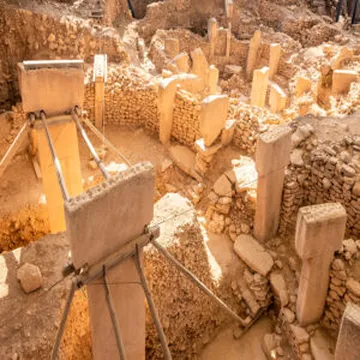
White highlights the significance of Gobekli Tepe in Turkey, noting that humans were building star temples before they built permanent houses. The site's lack of a natural water source and the presence of obsidian from distant regions suggest it was a major pilgrimage site. White discusses whether the location was chosen due to inherent paranormal activity or if the activity was a result of centuries of human conscious attention.

The Best Of Gordon White On THC: Remembering The Dark Prince of Chaos Magic
• 1:21:11 - 1:23:54

The Best Of Gordon White On THC: Remembering The Dark Prince of Chaos Magic

The Headless Rite and Orion Constellation

White connects Crowley's "Bornless Rite" to the ancient "Headless Rite" found in the Greek magical papyri, which refers to the dismembered god Osiris. He links this ritual to the Orion constellation and the Giza pyramid complex, noting that Crowley unknowingly performed a rite that aligned with much older star-temple traditions like those at Gobekli Tepe. This "accidental switching on of the spaceship" is presented as evidence of spirit-led guidance.

The Ethical Skeptic Roger B. Cunningham | ECDO Theory, Pole Shifts Explained, & Earth’s Cataclysmic Cycle
• 30:26 - 37:41

The Ethical Skeptic Roger B. Cunningham | ECDO Theory, Pole Shifts Explained, & Earth’s Cataclysmic Cycle

Göbekli Tepe, Pillar 43 and the 14800 BCE Date

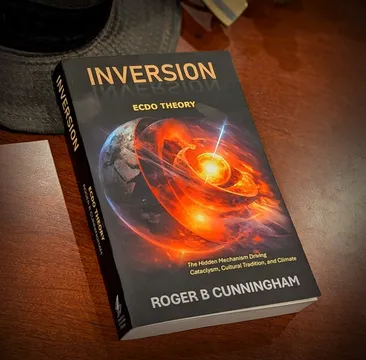
An analysis of Pillar 43 at Göbekli Tepe suggests the site is much older than mainstream carbon dating indicates, potentially dating back to 14,800 BCE. The carvings are interpreted as a star map depicting the celestial North Pole, the Cygnus constellation, and atmospheric phenomena like the Aurora Borealis. By identifying 165 stars in the asterisms, the theory aligns the pillar's imagery with a specific point in the procession of the equinoxes, coinciding with a prior cataclysmic inundation.

gobekli tepepillar 43cygnusaurora borealisaubrey segmentscelestial north pole
Andrew Collins | Karahan Tepe, Entering Sky World, & Plasma Being Communication Rituals
• 4:15 - 7:11

Andrew Collins | Karahan Tepe, Entering Sky World, & Plasma Being Communication Rituals

Andrew Collins, Ancient Civilizations and Plasma Intelligence Research

Author Andrew Collins joins the program to discuss his 40-year career researching the intersection of history, science, and ancient monuments. His bibliography includes works such as From The Ashes Of Angels, The Cygnus Key, and his latest book, Karahantepe: Civilization of the Anunnaki. Collins is notably credited with discovering a cave complex beneath the Great Pyramid of Egypt, now referred to as Collins Cave.

Andrew Collins | Karahan Tepe, Entering Sky World, & Plasma Being Communication Rituals
• 7:11 - 13:52

Andrew Collins | Karahan Tepe, Entering Sky World, & Plasma Being Communication Rituals

Karahantepe and the Tash Tepeler Culture in Turkey

Karahantepe is identified as a significant ritual site within the Tash Tepeler culture of southeastern Turkey, dating back approximately 12,000 years. While Göbekli Tepe is more famous, Karahantepe features similar T-shaped pillars and stone enclosures but suggests a darker, more shamanic ritual purpose. These sites are linked to myths of the Watchers, Nephilim, and Anunnaki, representing a memory of flesh-and-blood beings who initiated the Neolithic Revolution.

Dr. Heather Lynn | Censoring Human Origins, Magic, Baphomet, & The Academic Blockade
• 23:20 - 27:15

Dr. Heather Lynn | Censoring Human Origins, Magic, Baphomet, & The Academic Blockade

Gobekli Tepe and the Myth of Progress

The discovery of Gobekli Tepe challenges the traditional archaeological narrative that agriculture preceded religious thought. Evidence suggests humans may be biologically programmed for religious inclination and hierarchy before the advent of settled farming. Furthermore, the "Myth of Progress" is questioned by Egyptian artifacts that appear more advanced and precise in older iterations than in later periods.

gobekli tepeagriculturereligionmyth of progressegyptian monuments
Free Plus Show: Harald Kautz Vella | Black Goo, Black Magick, Spider Beings, & The Elite
• 2:20:26 - 2:25:06

Free Plus Show: Harald Kautz Vella | Black Goo, Black Magick, Spider Beings, & The Elite

Episode Wrap-up, Armenia Trip and Future Guests

Greg Carlwood reflects on the interview with Harold Kautz-Vella, noting the "180-degree" turn regarding the arrival of positive guardians. He discusses his recent research trip to Armenia, comparing the ancient sites to Gobekli Tepe and ground zero for Gnostic-Christian conflicts. Carlwood announces upcoming shows featuring Matthew Cross and Graham Hancock, and mentions plans for a new studio and an Armenia documentary.

Jim Willis | Entangled Spirit Beings, Unseen Energy, Ancient Technology, & The Conspiracy of Silence
• 46:47 - 56:17

Jim Willis | Entangled Spirit Beings, Unseen Energy, Ancient Technology, & The Conspiracy of Silence

Conspiracy of Silence in Academia and Suppressed Ancient History

The "conspiracy of silence" is defined as an active force in religion and academia that suppresses facts contradicting established narratives. Examples include the rigid adherence to the "Clovis First" theory in American archaeology and the dismissal of megalithic sites like Gobekli Tepe that challenge standard timelines of civilization. The guest suggests that modern civilization may be a recovery of lost innovative ideas from previous cycles of human history, such as the legendary Atlantis, rather than a linear progression of new discoveries.

Steven Snider AKA Recluse | The Secret History of Psywar, Weaponizing Conspiracy Culture, & The ASC Network
• 1:13:53 - 1:20:08

Steven Snider AKA Recluse | The Secret History of Psywar, Weaponizing Conspiracy Culture, & The ASC Network

THC Plus Benefits, Listener Feedback, and Upcoming Meetups

The episode concludes with a summary of THC Plus member benefits and a review of listener feedback regarding the previous episode on Gobekli Tepe. Upcoming listener meetups are announced for Los Angeles, Oakland, London, and Cincinnati throughout December. The show transitions into the closing music, "You Can Only Trust Yourself," which reinforces the episode's themes of skepticism and self-reliance.

Hugh Newman | New Discoveries Of Gobekli Tepe, Karahan Tepe, & Other Ancient Sites
• 2:18 - 5:37

Hugh Newman | New Discoveries Of Gobekli Tepe, Karahan Tepe, & Other Ancient Sites

Hugh Newman and the Mysteries of the Ancient Past

Hugh Newman returns to the program to discuss his new book, "Gobekli Tepe & Karahan Tepe: The World's First Megaliths." The discussion establishes the significance of the Tigris and Euphrates region as a hub for sophisticated ancient architecture, including megalithic complexes and underground cities. Newman's background with the Megalithomania Conference and his previous work on giants with Jim Vieira are highlighted.

hugh neummangobekli tepekarahan tepemegalithomaniajim vieirawooden books
Hugh Newman | New Discoveries Of Gobekli Tepe, Karahan Tepe, & Other Ancient Sites
• 5:38 - 9:45

Hugh Newman | New Discoveries Of Gobekli Tepe, Karahan Tepe, & Other Ancient Sites

Dating the Megalithic Sites of Southeast Turkey

Archaeological dating at Göbekli Tepe and Karahan Tepe suggests these structures are approximately 11,600 years old, significantly predating Stonehenge and the pyramids. Late archaeologist Klaus Schmidt and the German Archaeological Institute confirmed these dates by excavating to the bedrock. Recent findings near the Tigris River at sites like Cortik Tepe suggest human activity in the region may extend back 14,000 years.

klaus schmidtgerman archaeological institutegobekli tepekarahan tepeyounger dryassumer
Hugh Newman | New Discoveries Of Gobekli Tepe, Karahan Tepe, & Other Ancient Sites
• 9:46 - 13:16

Hugh Newman | New Discoveries Of Gobekli Tepe, Karahan Tepe, & Other Ancient Sites

Abstract Art and Advanced Stone Carving Technology

The complexity of the T-pillars and 3D relief carvings at Göbekli Tepe suggests a high level of innovation that appeared suddenly rather than evolving gradually. While smaller 3D carvings have been found at the older Cortik Tepe site, the scale and abstract nature of the 18-foot pillars at Göbekli Tepe indicate a sophisticated system of language or symbolism. The engineering required to move 50-ton stones remains a point of mystery for researchers.

t-pillars3d reliefgobekli tepecortik tepestone carvingsymbolism
The Ethical Skeptic | Embargoed Information, Syndicate Anti-Wisdom, & The Mysteries of Life
• 39:53 - 42:38

The Ethical Skeptic | Embargoed Information, Syndicate Anti-Wisdom, & The Mysteries of Life

Pseudoscience Labels and the Great Pyramid Embargo

The guest critiques the over-application of the term "pseudoscience" to topics like cryptids, UAPs, and ancient megalithic sites. He argues that structures like Gobekli Tepe and the Great Pyramid of Giza are subject to information syndicates that purposely misadvertise their age and origin. Specifically, he challenges the narrative that Khufu built the Great Pyramid in 20 years, calling the continued embargo on alternative archaeological evidence a crime against humanity.

Jason Quitt | Entity Interaction Dynamics, Astral Genesis, & Stonegate Portals
• 34:01 - 40:08

Jason Quitt | Entity Interaction Dynamics, Astral Genesis, & Stonegate Portals

Astral Genesis, Ancient Geometric Language of Stars

Jason Quitt discusses his book, Astral Genesis, which details a hidden geometric language encoded in ancient artwork and architecture worldwide. He identifies a consistent "fingerprint" of star knowledge and solar angles found in sites ranging from Gobekli Tepe to Peru and Canada. This suggests a unified, global civilization existed prior to 12,000 years ago that possessed advanced understanding of celestial cycles and mathematics.

astral genesisgobekli tepeegyptgeometrystar knowledgeleonardo da vinci
Jason Quitt | Entity Interaction Dynamics, Astral Genesis, & Stonegate Portals
• 51:56 - 53:23

Jason Quitt | Entity Interaction Dynamics, Astral Genesis, & Stonegate Portals

Gate of the Gods, Stone Gate Technology

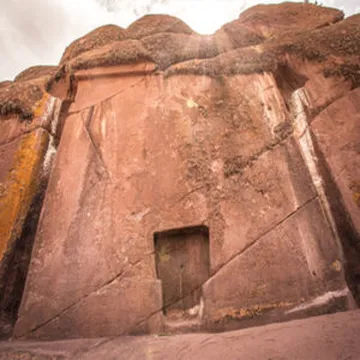
The discussion focuses on "stone gate" technology, specifically the Gate of the Gods near Lake Titicaca in Peru. Jason Quitt notes the T-shaped door's similarity to pillars at Gobekli Tepe and discusses legends of an Incan priest using a golden disk to open the portal. He links these "false doors" to solar themes in Sumeria and Egypt, where specific celestial alignments were required to "unlock" the spiritual or physical functions of the site.

gate of the godsperulake titicacagobekli tepegolden disksumeria
Hugh Newman & Jim Vieira | Giants of Ancient Britain, Geomancy, & Megalithic Sites
• 35:13 - 39:18

Hugh Newman & Jim Vieira | Giants of Ancient Britain, Geomancy, & Megalithic Sites

Smithsonian Institution and the Academic Cover-Up

Jim Vieira addresses the alleged suppression of giant remains by the Smithsonian Institution, specifically under the leadership of Dr. Aleš Hrdlička. While many skeletons reportedly crumbled to dust upon exposure, Vieira argues that a scientific paradigm shift in the early 20th century led to the marginalization of mythological or "fringe" evidence. He emphasizes that while institutions may ignore the data, the physical evidence at sites like Baalbek remains inexplicable by standard historical models.

smithsonian institutiondr herdlitschkethomas perrinbaalbekgobekli tepe
Hugh Newman & Jim Vieira | Giants of Ancient Britain, Geomancy, & Megalithic Sites
• 1:06:10 - 1:10:22

Hugh Newman & Jim Vieira | Giants of Ancient Britain, Geomancy, & Megalithic Sites

Upcoming Projects and Spiritual Teachings

The guests share their current projects, including tours of Göbekli Tepe and appearances on television programs like Ancient Aliens and William Shatner's The Unexplained. Jim Vieira discusses his 25-year study with a spiritual teacher and his advocacy for alternative mental health protocols, including psilocybin. They direct listeners to the Megalithomania website for videos, books, and conference information.

Matthew LaCroix | Suppressed History, Anunnaki Engineering, & The Eagle/Serpent Divide
• 31:38 - 34:59

Matthew LaCroix | Suppressed History, Anunnaki Engineering, & The Eagle/Serpent Divide

Earth Grid Shifts, Magnetic North, and Global Cataclysms

Ancient megalithic sites like Tiahuanaco near Lake Titicaca are located in inhospitable high altitudes that align with energetic vortex zones on the Earth's grid. Many of these structures, including those at Gobekli Tepe and Giza, are now misaligned with magnetic north by approximately 23 degrees. This discrepancy indicates that a violent pole shift or global cataclysm occurred in the past, physically moving the Earth's crust and rendering the original energy-harnessing functions of these sites inactive.

tiahuanacolake titicacaley linesmagnetic northgobekli tepe
Jared Murphy | Advanced Ancestors, Hidden History, & Megalithic Mysteries
• 32:57 - 36:24

Jared Murphy | Advanced Ancestors, Hidden History, & Megalithic Mysteries

Gobekli Tepe Excavation and Archaeological Bias

Only five percent of Gobekli Tepe has been excavated, yet mainstream archaeologists have already labeled the site a religious temple. Critics argue that this "temple" paradigm is a projection of modern culture and that the site likely served a more complex technological or functional purpose for a frequency-aware society.