Topic: Biodiversity

Biodiversity comes up in 16 chapters across 13 episodes of The Higherside Chats Free Show, from June 2012 to August 2026.

June 2012 August 2026

Related topics

The Ethical Skeptic Roger B. Cunningham | ECDO Theory, Pole Shifts Explained, & Earth’s Cataclysmic Cycle
• 1:00:36 - 1:03:41

The Ethical Skeptic Roger B. Cunningham | ECDO Theory, Pole Shifts Explained, & Earth’s Cataclysmic Cycle

Human Migration, Amazon Biodiversity and the Saharan Shield

The preservation of species diversity in the Amazon and Congo basins is attributed to their proximity to the Euler axes during Earth rotations. These areas serve as survival points, explaining why they remain the most biodiverse regions on the planet. While mitochondrial DNA suggests an "Out of Africa" origin for humanity, ECDO theory supports this by identifying the Saharan Shield as a protected habitat that allowed for species continuity during global cataclysms.

mitochondrial dnawallace lineamazon basincongo basinsaharan shieldbiodiversity
Jim Gale | The Ultimate Psyop, Food Forest Abundance, & Resilience as Resistance
• 27:44 - 29:44

Jim Gale | The Ultimate Psyop, Food Forest Abundance, & Resilience as Resistance

Minnesota Food Forest, Biodiversity, and Exponential Free Energy

A food forest in northern Minnesota near Lake Superior serves as a case study for high biodiversity in cold climates, featuring over 300 varieties of edible and medicinal plants. The site has reportedly led to the natural germination of 100,000 food plants on neighboring lands via wind and bird dispersal. This demonstrates the "exponential free energy" of nature, where a single well-designed system can regenerate an entire local ecosystem.

minnesotalake superiorbiodiversitymedicinal plantsseed dispersal
David Avocado Wolfe | The Magic Of Nature, Rudolf Steiner, & Charles Fort
• 20:04 - 23:19

David Avocado Wolfe | The Magic Of Nature, Rudolf Steiner, & Charles Fort

Teleportation, Fish Falls, and Atmospheric Doorways

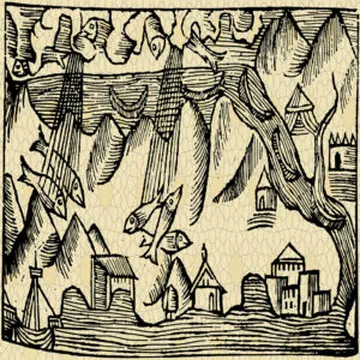
Charles Fort's observations on fish and frog falls are explored as evidence of teleportation and dimensional doorways in the atmosphere. Wolf cites a 2021 fish fall in Texarkana, Texas, as a recent example of nature balancing itself by moving species where they are needed. He rejects the mainstream explanation of whirlwinds, noting that these falls often consist of a single species of uniform size.

David Avocado Wolfe | The Magic Of Nature, Rudolf Steiner, & Charles Fort
• 25:35 - 28:05

David Avocado Wolfe | The Magic Of Nature, Rudolf Steiner, & Charles Fort

Spiritual Origins of Biodiversity and Psychedelics

The origin of new species is attributed to the spirit world, with Wolf citing Steiner's view that souls work on developing organisms before they manifest physically. He argues that psychedelics serve to cure individuals of the belief that there is no spirit world. He also critiques NASA's "alone in the universe" narrative as a demonic program designed to isolate human consciousness.

Dr. Jacob Nordangard | Philanthrocapitalism, Recent UN Policy Briefs, & The Digital World Brain
• 38:05 - 39:44

Dr. Jacob Nordangard | Philanthrocapitalism, Recent UN Policy Briefs, & The Digital World Brain

Outer Space Governance, Satellite Surveillance Expansion

The UN policy brief titled The Future of Outer Space Governance outlines plans for a Lunar Gateway station and manned missions to Mars. Beyond exploration, the primary objective is the expansion of global navigation satellite systems to track deforestation, poaching, and human movement. This space-based infrastructure is presented as a critical component for monitoring compliance with the 2030 Agenda for Sustainable Development.

moonmarslunar gatewaysatellite surveillancebiodiversity
Gordon White | Ani.Mystic, The Living Cosmos, & Universal Agency
• 13:03 - 15:13

Gordon White | Ani.Mystic, The Living Cosmos, & Universal Agency

Indigenous Knowledge Systems and Invasive Species Agency

Greg Carlwood quotes White’s work regarding the difference between materialist naturalism and animism in the context of ecology. While Western science views "invasive" species like the kudzu vine as external threats, indigenous systems often view them as nations with their own agency. The segment argues that human impact is an integral part of a biodiverse system rather than a purely negative external driver.

biodiversitykudzu vinematerialist naturalismconservationecologybiology
Carey Gillam | The Monsanto Papers, Glyphosate Damage, & Corrupted Science
• 17:16 - 19:11

Carey Gillam | The Monsanto Papers, Glyphosate Damage, & Corrupted Science

Pollinator Decline, Monarch Butterflies, Neonicotinoid Insecticide Risks

Widespread pesticide use is linked to sharp declines in monarch butterfly and honeybee populations, threatening global biodiversity and food security. While glyphosate impacts the milkweed habitats essential for monarchs, a class of insecticides known as neonicotinoids is identified as a primary culprit in honeybee colony collapse. The United Nations has warned that the pervasive rise in pesticide application has catastrophic implications for bird populations and human environmental health.

monarch butterflieshoneybeespollinatorsneonicotinoidsbiodiversity
Dr. Jack Hunter | Greening The Paranormal, Animism, & Foreign Intelligence
• 3:47 - 6:39

Dr. Jack Hunter | Greening The Paranormal, Animism, & Foreign Intelligence

Ecological Engagement and the Extraordinary Experience Feedback Loop

Participation in ecological systems, such as gardening or trekking, is linked to an increased frequency of extraordinary experiences. A feedback loop exists where engagement with the natural world triggers paranormal events, which in turn fosters a deeper desire to protect biodiversity. This perspective recontextualizes the relationship between modern industrial society and the natural environment.

Peter Moon | Ancient Secrets, Radu Cinamar, & The Inner Earth Tunnels
• 36:44 - 40:18

Peter Moon | Ancient Secrets, Radu Cinamar, & The Inner Earth Tunnels

Subterranean Cities of Tomasis and Apellos

Radu Sinamar describes visiting two distinct subterranean cities: Tomasis, located in the Earth's crust, and Apellos, a physical city deeper within the inner earth. Tomasis is situated near the Moho layer, a honeycomb-like region 22 miles down, while Apellos exists at a different vibrational frequency with its own ecosystem and internal light source. These cities demonstrate a level of biodiversity far beyond surface-level understanding.

tomasisapellosmoho layerbiodiversityvibrational frequency
Peter Allen | Mastodon Valley Farm, Permaculture, & The Wilderness Myth
• 9:10 - 13:18

Peter Allen | Mastodon Valley Farm, Permaculture, & The Wilderness Myth

Wilderness Myth, Pre-Colonial North American Land Management

The Wilderness Myth incorrectly suggests that North America was an untouched, passive landscape before European arrival. Historical data and pollen records reveal that indigenous populations actively managed the continent, creating ecosystems that supported higher densities of herbivores like bison and elk than modern industrial systems. The perceived "wildness" reported by early settlers was often the result of an ecological explosion following the genocide of the primary human land managers.

Peter Allen | Mastodon Valley Farm, Permaculture, & The Wilderness Myth
• 36:22 - 38:32

Peter Allen | Mastodon Valley Farm, Permaculture, & The Wilderness Myth

Disturbance Theory, Biodiversity and Chaos

Ecological diversity is maintained through continual disturbances, ranging from small-scale indigenous burns to large-scale events like the Younger Dryas or comet impacts. Static environments tend to lose diversity over time, necessitating a cycle of "order out of chaos" to keep nature evolving. This principle aligns with ancient pagan and Druidic practices that recognized the necessity of active engagement with the natural landscape.

Sofia Smallstorm | Biological Darkness & Techno-Eugentics
• 13:49 - 16:28

Sofia Smallstorm | Biological Darkness & Techno-Eugentics

Tree Defense Mechanisms and the Decline of Biodiversity

The conversation details how trees use red pigments as a sunscreen defense mechanism during nutrient transfer before winter. Observations of sycamore trees holding dead leaves and conifers producing cones annually instead of every decade are cited as signs of biological desperation. These anomalies are presented as indicators of a larger agenda leading to the extinction of natural species and a decline in global biodiversity.

biopolymerssycamore treesconifersbiodiversityreproductive stress
Daniel Pinchbeck | Trump, Initiation, & The Ecological Crisis
• 9:42 - 13:41

Daniel Pinchbeck | Trump, Initiation, & The Ecological Crisis

Climate Change, Methane Spikes, and Species Extinction Risks

Daniel Pinchbeck outlines the dire environmental stakes detailed in his book, highlighting the risk of human extinction due to climate change. He explains the danger of methane deposits in the Siberian permafrost, which are 30 times more potent than CO2 as a heat-trapping gas. The conversation links these ecological tipping points to the failure of establishment politicians like Obama and Clinton to address underlying life-support issues.

Wm Michael Mott | Underground Entities, Beings From Below, & The True String Pullers Of Humanity
• 7:25 - 11:32

Wm Michael Mott | Underground Entities, Beings From Below, & The True String Pullers Of Humanity

Genetic Compatibility and Advanced Biological Engineering

The conversation explores the idea that anomalous humanoids are part of Earth's native biodiversity rather than visitors from other galaxies. Mott posits that if these beings were truly capable of interstellar travel, they would possess the technology to repair their own genetic code rather than relying on painful experiments on humans. Their humanoid form and genetic interest suggest a shared terrestrial heritage, possibly linked to the biblical Nephilim.

geneticsextremophilesbiological engineeringnephilimbiodiversity
Wm Michael Mott | Underground Entities, Beings From Below, & The True String Pullers Of Humanity
• 11:33 - 13:50

Wm Michael Mott | Underground Entities, Beings From Below, & The True String Pullers Of Humanity

Earthly Vertebrate Template in Anomalous Encounters

Mott applies Occam's Razor to the morphology of reported aliens, noting that most sightings describe beings with two arms, two legs, and a central trunk. He argues that this adherence to the earthly vertebrate template suggests a local origin rather than a radically different evolutionary path from another planet. The diversity of these beings is compared to the varied but related species found in the known animal kingdom.

vertebrate templateoccam's razorbiodiversitymorphologysightings
THC 23: Pat Chouinard | Ancient Civilizations, Alien Intervention, & The Terran Race
• 39:12 - 42:22

THC 23: Pat Chouinard | Ancient Civilizations, Alien Intervention, & The Terran Race

Genetic Bottlenecks and Ancient Biodiversity

A genetic bottleneck occurring approximately 100,000 years ago is discussed as evidence of a global cataclysm that nearly wiped out humanity. Channard notes that modern humans have significantly less genetic diversity than Neanderthals or chimpanzees. He suggests that ancient Earth may have hosted a much wider variety of human races, including those with different skin tones or physical statures.