Topic: Wall Street

Wall Street comes up in 39 chapters across 31 episodes of The Higherside Chats Free Show, from February 2012 to August 2026.

February 2012 August 2026

Related topics

Matthew J. Bell | Bankers Trust, Nicholas Roerich, & The Mystic Stone From Sirius
• 11:29 - 15:16

Matthew J. Bell | Bankers Trust, Nicholas Roerich, & The Mystic Stone From Sirius

Bankers Trust Building, Ground Zero and Human Remains

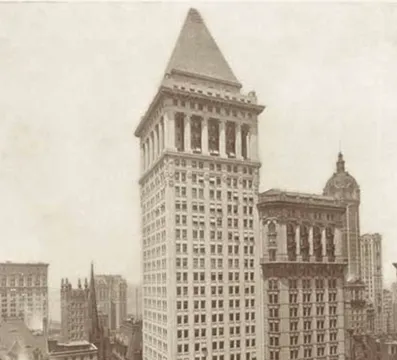
The Bankers Trust headquarters at 130 Liberty Street was severely damaged during the September 11 attacks and later became a repository for over 700 human bone fragments found on its roof. Historically, the firm's previous headquarters at 14 Wall Street was architecturally modeled after the Mausoleum of Halicarnassus, a famous ancient tomb. This symbolic connection to death and sacrifice is analyzed alongside the physical proximity of the building to the Twin Towers.


bankers trust building14 wall streetground zero9/11mausoleum of halicarnassus
Matthew J. Bell | Bankers Trust, Nicholas Roerich, & The Mystic Stone From Sirius
• 1:03:29 - 1:07:03

Matthew J. Bell | Bankers Trust, Nicholas Roerich, & The Mystic Stone From Sirius

Bankers Trust Diplomatic Immunity, 14 Wall Street and 9/11 Profits

In 1928, Bankers Trust issued a diplomatic letter of introduction for Nicholas Roerich, allowing him to transport esoteric artifacts through India without interference. The firm's headquarters at 14 Wall Street featured a 24-step pyramid roof, mirroring the Masonic symbolism of its 32 usable floors. The segment concludes by linking these architectural occult markers to the unclaimed 9/11 profits and the rise of the CIA's executive leadership from within the Bankers Trust network.

bankers trustnicholas roerich14 wall streetdeutsche banka.b. krongard
WAR MODE | WAR MODE WAR MODE WAR MODE WAR MODE
• 1:03:42 - 1:06:00

WAR MODE | WAR MODE WAR MODE WAR MODE WAR MODE

Occupy Movement Shift and the Psy-Op Singularity

The hosts observe the dramatic shift in the "Occupy" demographic, which moved from distrusting the government to enforcing state mandates like masking. They discuss how constant psychological operations have left the public "punch drunk" and unable to identify false flags. The segment concludes that the system's primary goal is perception management to prevent people from realizing their own power.

Chris Knowles | The Spandex Files: Creative Magic, The Kirby Conduit, & Demon Dinosaur
• 30:29 - 37:11

Chris Knowles | The Spandex Files: Creative Magic, The Kirby Conduit, & Demon Dinosaur

Corporate Takeover of Comic Book Intellectual Property

Christopher Knowles explains how the comic book industry thrived when it was a "penny-ante" business ignored by corporate masters. He traces the decline to 2008 when big money entered the scene, followed by a shift from class consciousness to race consciousness after Occupy Wall Street. He reveals that his long-standing division at Marvel, Consumer Products, was recently shut down and absorbed by Disney, marking the end of an era for creative latitude.

marveldc comicsoccupy wall streetconsumer productstrademarkscorporate culture
Kerry McDonald | The Unschooling Movement & The Many Pitfalls Of Conventional Education
• 56:20 - 1:00:19

Kerry McDonald | The Unschooling Movement & The Many Pitfalls Of Conventional Education

George Carlin, Education Critique and The Big Club

A classic audio clip of comedian George Carlin is played, where he critiques the American education system as a tool for the "real owners" of the country. Carlin argues that the elite do not want a population capable of critical thinking, but rather "obedient workers" who are just smart enough to run machines. He characterizes the political and economic system as a "big club" that the average citizen is excluded from.

Etienne de la Boetie2  | The Government Scam, Inter-Generational Organized Crime, & The Freedom Plan
• 6:55 - 10:52

Etienne de la Boetie2 | The Government Scam, Inter-Generational Organized Crime, & The Freedom Plan

Think Tank Operations and Visual Learning for Political Awakening

Etienne de la Boetie Squared details his professional background in technology, Wall Street, and a major libertarian think tank in Washington, D.C. He explains that his book uses visualizations and memes to bypass cognitive biases and reach visual learners quickly. He highlights a media organization chart showing how groups like the Council on Foreign Relations and the Bilderberg Group influence major media outlets.

John Michael Greer | Political Sorcery, Will, & Weaponized Magic
• 16:21 - 19:46

John Michael Greer | Political Sorcery, Will, & Weaponized Magic

Class Divisions, Occupy Wall Street and Identity Politics

American society is divided into four primary economic groups: the investment class, salary class, wage class, and welfare class. The rise of critical race theory and gender theory is characterized as a strategic distraction funded by the wealthy to prevent a unified class-based movement following the Occupy Wall Street protests.

occupy wall streetinvestment classsalary classwage classcritical race theory
Alison McDowell | Human Capital Markets, Predatory Philanthropy, & The Gamified World
• 1:22:42 - 1:26:03

Alison McDowell | Human Capital Markets, Predatory Philanthropy, & The Gamified World

Strategic Outreach, Wall Street Greed Template

The host suggests that using the template of Wall Street greed and the 2008 crash is a more effective outreach strategy than attacking vaccine paradigms directly. He reiterates that Allison McDowell's work reveals a militaristic technocracy takeover disguised as philanthropy. The show concludes with a final push for listeners to follow McDowell's research at wrenchinthegears.com.

wall street2008 crashtechnocracyoutreachwrenchinthegears.com
Dr. Angela J. Hattery & Dr. Earl Smith | Policing Black Bodies, Prison Inc., & The Poverty Trap
• 40:23 - 44:11

Dr. Angela J. Hattery & Dr. Earl Smith | Policing Black Bodies, Prison Inc., & The Poverty Trap

Black Wall Street, Tulsa Race Massacre and Jim Crow Economics

The discussion highlights historical instances where Black communities thrived, such as Seneca Village in New York and Black Wall Street in Tulsa, only to be destroyed by elite interests or racial violence. Dr. Hattery argues that the criminal justice system replaced Jim Crow as the primary tool for suppressing Black economic power. She notes that the Jim Crow system was economically inefficient for poor whites because it required the costly duplication of every public institution.

tulsa race massacreblack wall streetseneca villagejim crowemancipation
Dr. Angela J. Hattery & Dr. Earl Smith | Policing Black Bodies, Prison Inc., & The Poverty Trap
• 1:12:56 - 1:16:58

Dr. Angela J. Hattery & Dr. Earl Smith | Policing Black Bodies, Prison Inc., & The Poverty Trap

Host Wrap-up, Tulsa Race Massacre and Class Division

Greg Carlwood reflects on the interview, acknowledging that some listeners might find the topic "fatiguing" or "political." He provides a detailed historical account of the 1921 Tulsa Race Massacre in the Greenwood District, highlighting it as a "conspiratorial" piece of Black history often ignored in mainstream circles. Carlwood reiterates the theme that the elite use racial and political divisions (red vs. blue, Black vs. white) to prevent the lower classes from uniting against the 1%.

greg carlwoodtulsa race massacregreenwood districtblack wall streetclass warfare
Chris Knowles | He Will Live Up In The Sky, The Tangled Web, & The Woke Virus
• 52:21 - 55:46

Chris Knowles | He Will Live Up In The Sky, The Tangled Web, & The Woke Virus

Origins of the Woke Virus and Intersectionalism

Chris Knowles traces the origins of "wokeness" to the radical movements of the 1960s and the subsequent retreat of activists into liberal arts colleges. He defines intersectionalism as a weaponized form of radical feminism used to determine levels of victimization. Knowles argues that this "illiberal leftism" is essentially a divide-and-rule tactic that has become a permanent fixture in modern discourse, functioning more like a religion than a political philosophy.

woke virusintersectionalismoccupy wall streetradical feminismpolitical correctness
Ellen Brown | The Broken Economy & The Public Banking Solution
• 12:37 - 15:03

Ellen Brown | The Broken Economy & The Public Banking Solution

Nationalization versus Regulation of Wall Street Banks

Regulation and the breaking up of banks via the Glass-Steagall Act may be insufficient because large international banks perform essential functions for governments. Nationalizing these institutions is proposed as a solution to ensure they operate in the public interest, especially as global sovereign debt reaches record levels. Proponents argue that the next financial collapse will likely trigger "bail-ins" where banks seize depositor funds to stay solvent.

glass-steagall actnationalizationwall streetsovereign debt2008 financial crisis
Ras Ben | Free Your Mound & Your Mind Will Follow
• 50:15 - 54:55

Ras Ben | Free Your Mound & Your Mind Will Follow

Avenging the Ancestors Coalition, Civil War Monuments and Reclamation

Attorney Michael Coard and the Avenging the Ancestors Coalition (ATAC) are highlighted for their work in Philadelphia to prevent the development of indigenous burial sites. Similar reclamation efforts are noted in Richmond and at the African burial ground near Wall Street in Manhattan, where memorials were erected to honor the dead. The debate over Civil War monuments is framed as a surface-level issue, with the deeper work involving the karmic unloading of negativity across the entire empire.

michael coardatacrichmondwall streetcivil war monuments
Alex Tsakiris | The Consciousness Quarantine, Skeptiko, & Data From The Fringe
• 32:40 - 36:25

Alex Tsakiris | The Consciousness Quarantine, Skeptiko, & Data From The Fringe

Culture Shaping, CIA Psyops, War on Drugs

The hosts debate whether the "culture shapers" are proactive master planners or reactive opportunists. Tsakiris argues that the CIA and shadow government often throw ideas at the wall to see what sticks, citing the War on Drugs as a reactive measure to the spiritual awakening of the 1960s. They discuss Joe Atwill's theories on culture shaping and the eventual shutdown of movements like Occupy Wall Street as examples of the elite putting the "genie back in the bottle."

Shamangineer | Fascism: The History, The Psychology, & The Re-emergence
• 52:59 - 56:57

Shamangineer | Fascism: The History, The Psychology, & The Re-emergence

Challenges of Egalitarian and Communal Living

A personal anecdote regarding the Occupy Wall Street movement illustrates the difficulties of egalitarian groups, where a lack of hierarchy can lead to "analysis paralysis" and chaos. However, the Mondragon Corporation in Spain is cited as a successful example of a large-scale worker cooperative where employees vote on company policy. The rarity of such successes is attributed to both internal organizational hurdles and external sabotage by dominant authoritarian systems.

occupy wall streetanarchymondragon corporationworker cooperativesconsensus
Shamangineer | Fascism: The History, The Psychology, & The Re-emergence
• 1:26:27 - 1:28:54

Shamangineer | Fascism: The History, The Psychology, & The Re-emergence

Self-Regulation through Work Democracy and Corporate Psychopathy

Work democracy would lead to better environmental self-regulation because workers are unlikely to vote to poison the communities where they live. In contrast, the current corporate model—as explored in the documentary "The Corporation"—functions as a legal person with psychopathic traits, prioritizing shareholder profit above all else. This exploitative modality ensures that executives on Wall Street remain indifferent to the environmental and social damage caused by their firms.

Jen Briney | Legislation 2017: Corporatization, Backdoor Deals, Data, & DNA
• 8:05 - 11:21

Jen Briney | Legislation 2017: Corporatization, Backdoor Deals, Data, & DNA

Investor Class Welfare and the Moocher Narrative

Public discourse often brands recipients of Medicare, Medicaid, and food stamps as "moochers" while ignoring the massive subsidies provided to the investor class. The economy is increasingly structured to benefit those who profit from Wall Street speculation rather than physical labor. Tax loopholes and corporate welfare programs often dwarf the entire federal budget allocated for social safety nets, yet the political focus remains on cutting benefits for the poor.

THC & TFH Live | Steve Lee, Jimmy Dore, Eddie Bravo, John Tole, Brendon Walsh, Vanessa Johnston & Gareth Reynolds
• 45:56 - 48:19

THC & TFH Live | Steve Lee, Jimmy Dore, Eddie Bravo, John Tole, Brendon Walsh, Vanessa Johnston & Gareth Reynolds

Anti-War Movement, Charlottesville and Media Static

Brendan Walsh joins the stage to discuss how the media uses events like Charlottesville to drive a wedge between the left and right, preventing a unified anti-war movement. The speakers argue that modern news is "static" designed to keep the public confused and scared, pointing to the rapid production of tributes for the Vegas shooting as suspicious.

Michael Joseph | The Hidden Hand, Elite Bloodlines, Root Races, & Occult Religion
• 1:01:01 - 1:05:13

Michael Joseph | The Hidden Hand, Elite Bloodlines, Root Races, & Occult Religion

Occupy Movement, Libya Conflict and Astrological Archetypes

Joseph analyzes the Occupy Wall Street movement and the 2011 Libya conflict through the lens of astrological archetypes. He argues that the "ballerina on the bull" Occupy symbol and the media portrayal of Muammar Gaddafi as a "phallic oppressor" were manufactured narratives synchronized with the sun's transit through Virgo and Scorpio.

F. William Engdahl | The Lost Hegemon, The Oligarchs’ Decline, & What Comes Next
• 52:49 - 56:31

F. William Engdahl | The Lost Hegemon, The Oligarchs’ Decline, & What Comes Next

U.S. Economic Depression, Infrastructure Deficit, and Federal Reserve

The real U.S. unemployment rate is estimated at nearly 23% based on Shadow Government Statistics, suggesting a Great Depression-level crisis. The discussion advocates for the repeal of the Federal Reserve Act of 1913 to return credit-creation power to Congress. A $3 trillion national infrastructure deficit is highlighted as a consequence of bailing out Wall Street banks instead of investing in the domestic economy.