Topic: Information Theory

Information Theory comes up in 6 chapters across 6 episodes of The Higherside Chats Free Show, from June 2014 to September 2026.

June 2014 September 2026

Related topics

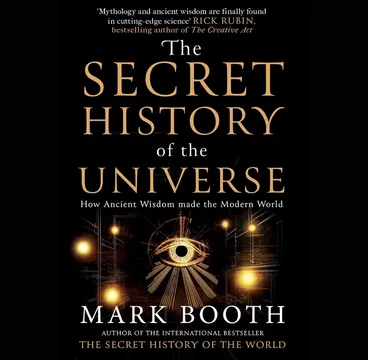
Mark Booth | Mystic Scientists, Strange Happenings, & The Secret History Of The Universe
• 36:34 - 39:34

Mark Booth | Mystic Scientists, Strange Happenings, & The Secret History Of The Universe

Universal Intelligence and Human Evolution

Modern scientists are beginning to view the universe as an evolving system of logical ideas and algorithms. If the fabric of the universe possesses intelligence, the evolution of human consciousness becomes a probable outcome rather than a freak accident of chance. This perspective aligns with ancient religious teachings that describe the human mind as an emanation of a singular cosmic mind.

algorithmscosmic mindevolutioninformation theoryfine structure constant
The Arkon & The Greek | Cosmic Censorship, Supernatural Beings, & The Biological Vacuum
• 1:00:38 - 1:04:39

The Arkon & The Greek | Cosmic Censorship, Supernatural Beings, & The Biological Vacuum

Taboo Truths and the Etymology of Nice

The Greek discusses the "rawest of truths," claiming that the most outlandish conspiracy theories on the internet are actually mild compared to reality. He advises against public recitation of these truths, as they will not be accepted by the general public. He uses the etymology of the word "nice"—which originally meant foolish or stupid—as an example of how looking up information personally carries more impact than being told.

Jim Elvidge | Digital Consciousness, Decoding Reality, & Unpacking The Paranormal
• 6:23 - 10:52

Jim Elvidge | Digital Consciousness, Decoding Reality, & Unpacking The Paranormal

Defining Digital Reality and Critiquing Transhumanism

Jim Elvidge clarifies that his use of the term "digital" refers to an information-based reality rather than a cold, mechanical system. He critiques the transhumanist movement, arguing that many proponents are materialists who mistakenly believe consciousness must be uploaded to hardware to achieve immortality. Elvidge posits that reality is a virtual construct where the brain acts as a processor for digital signals, and that consciousness is already immortal through reincarnation.

Dr. Joseph P. Farrell | Microcosm & Medium: The Cosmic Implications Of Mind Control Tech
• 24:08 - 26:40

Dr. Joseph P. Farrell | Microcosm & Medium: The Cosmic Implications Of Mind Control Tech

Musical Alchemy, Information Manipulation and Nihilism

Baroque music theory frequently borrowed terminology from alchemy to describe the processing and permutation of musical information. Farrell views this as a way of manipulating information analogically, treating the universe as a complex biological system rather than a machine. He argues that the modern shift toward abstraction and mechanistic views represents a form of nihilism and an assault on humanity itself.

alchemyj.s. bachinformation theorybiological systemsnihilismcubism
Dr. Joseph P. Farrell | Babylon’s Banksters, Financial Alchemy, & The Secret Science Connection
• 14:15 - 19:50

Dr. Joseph P. Farrell | Babylon’s Banksters, Financial Alchemy, & The Secret Science Connection

Topological Metaphor and the Physics of Fractional Reserve Banking

Farrell explains the "topological metaphor of the medium," a concept where creation stems from an undifferentiated primordial nothing. By mathematically differentiating this "nothing," information and numbers are created, which Farrell links to the mechanics of finance. He argues that fractional reserve banking is a "black magic" version of this physics, where existence is framed as a debt owed to what preceded it.

topological metaphorprimordial nothingfractional reserve bankinghinduisminformation theorydebt
THC 113: Philip Farber | Understanding Invocation & Evocation Magick
• 13:21 - 15:42

THC 113: Philip Farber | Understanding Invocation & Evocation Magick

Memetic Entities, Richard Dawkins and Information Spread

The concept of memetic entities is introduced as the study of how information spreads similarly to genetic material. Farber references Richard Dawkins, the creator of the term "meme," noting the irony that a prominent atheist provided the framework for understanding how "memeplexes" or informational entities function. These entities are described as the sum total of the information and beliefs that compose them.