Topic: Friedrich Nietzsche

Friedrich Nietzsche comes up in 7 chapters across 7 episodes of The Higherside Chats Free Show, from February 2012 to August 2026.

February 2012 August 2026

Related topics

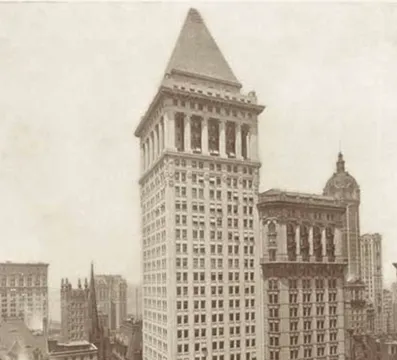
Matthew J. Bell | Bankers Trust, Nicholas Roerich, & The Mystic Stone From Sirius
• 45:52 - 48:01

Matthew J. Bell | Bankers Trust, Nicholas Roerich, & The Mystic Stone From Sirius

Aleister Crowley, Friedrich Nietzsche and the Will to Power

The concept of "Will" is a central pillar of 20th-century philosophy and occultism, from Aleister Crowley’s Thelema to Friedrich Nietzsche’s "Will to Power." Michael Hoffman’s "Twilight Language" identifies the name "Willard" (as in Mitt Romney) as a signifier for one who is willful. This focus on the human will is traced back to medieval theologians like Duns Scotus and is viewed as a defining characteristic of the modern era.
Nick Hinton | The Psypocalypse, Father Seraphim Rose,  & Quantum Sorcery Chaos Magic
• 23:54 - 27:13

Nick Hinton | The Psypocalypse, Father Seraphim Rose, & Quantum Sorcery Chaos Magic

Chaos Magic, Quantum Sorcery, and Manifesting Fiction

The weaponization of synchronicity through storytelling and fiction is examined. The discussion links CIA programs like Project Stargate to quantum sorcery and chaos magic. A personal anecdote describes living out the philosophies of Nietzsche by traveling and experimenting with magical practices to see if fictional theories could manifest in reality.

Whitley Strieber | Them: The Soul-Body Connection, The Secrecy Policy, & The Good Questions
• 38:49 - 42:35

Whitley Strieber | Them: The Soul-Body Connection, The Secrecy Policy, & The Good Questions

Left Brain Dominance and the Master and Emissary

Strieber references Friedrich Nietzsche’s parable of "The Master and His Emissary" to describe the dangerous dominance of the left brain in Western society. He argues that when the left brain (the emissary) overpowers the right brain (the master), empathy is lost, leading to authoritarianism. He cites historical and modern leaders as examples of individuals who lack right-brain access.

Richard Dolan | Global Totalitarianism, Technocracy, & The Alien Agendas
• 35:05 - 38:15

Richard Dolan | Global Totalitarianism, Technocracy, & The Alien Agendas

Commodification of Human Relationships and the Death of God

Richard Dolan explores how upper-level financial capitalism seeks to commodify every human action and relationship, turning authentic connections into transactional ones. He argues that progressivist ideology acts as a solvent to traditional structures like family, nation, and religion. Referencing Nietzsche’s "death of God," Dolan suggests that the state and consumer culture are being positioned to replace traditional spiritual and communal values.

financial capitalismcommodificationfriedrich nietzscheconsumer cultureprogressivism
Gary Lachman | Holy Russia, Rudolf Steiner, & Cultural Spirits
• 51:10 - 56:00

Gary Lachman | Holy Russia, Rudolf Steiner, & Cultural Spirits

Nihilism, Identity Politics, and the Return to Former Glory

Gary Lachman applies Nietzsche’s concept of "trickle-down metaphysics" to the current global identity crisis. He argues that the deconstruction of Western values has left a void, leading to the rise of "identity politics" and a "war of all against all." In this chaotic environment, leaders like Putin and Trump become attractive by promising a return to former national glory—whether through the concept of "Holy Russia" or "Make America Great Again."

THC 97: Guy McPherson | Environmental Degradation, Ocean Acidification, & Collapse
• 55:17 - 58:00

THC 97: Guy McPherson | Environmental Degradation, Ocean Acidification, & Collapse

Southern Habitats, Nietzsche and the Zombie Apocalypse

For those seeking to extend their survival, McPherson identifies the southern tips of Chile, Australia, New Zealand, and South Africa as the last potential human habitats. However, he references Friedrich Nietzsche to argue that living well is more important than mere longevity. The host and guest joke about the "bubble boy conundrum" and the reality of a "zombie apocalypse," concluding that a long life in a collapsed world may not be desirable.

THC 11: Michael Tsarion | Symbolism and Control
• 46:10 - 49:50

THC 11: Michael Tsarion | Symbolism and Control

Nietzsche, Heidegger, and the Critique of Collective Consciousness

Philosophers Friedrich Nietzsche and Martin Heidegger critiqued the dependence on collective consciousness for a sense of self. Tesarion discusses how a child learns they are an individual through the perception of others, which can lead to a chronic addiction to the collective. He explores the difficulty of "going cold turkey" from society and the risks of total isolation.

friedrich nietzschemartin heideggercollectivismselfhoodhermits