Topic: Mimicry

Mimicry comes up in 6 chapters across 6 episodes of The Higherside Chats Free Show, from May 2019 to September 2024.

May 2019 September 2024

Related topics

Mark Shepard | Restoration Agriculture, Wild Profit, & Nature’s Intelligence
• 4:23 - 9:54

Mark Shepard | Restoration Agriculture, Wild Profit, & Nature’s Intelligence

Annual Crop Agriculture, Slavery and Natural Ecosystem Mimicry

Mark Shepard argues that the transition from hunter-gatherer lifestyles to annual crop agriculture 10,000 years ago introduced class stratification and various forms of slavery. He posits that modern agriculture relies on exploited labor while destroying natural ecosystems. Restoration agriculture is presented as a method of mimicking natural plant communities to maintain soil fertility and survive environmental disturbances like hurricanes or tsunamis.
annual cropshunter-gatherersslaveryecosystem mimicrysoil fertilityagriculture history
Nick Orton | Military Encounters With Cryptids, Time Glitches, & The Paranormal
• 50:35 - 53:14

Nick Orton | Military Encounters With Cryptids, Time Glitches, & The Paranormal

Ghost Soldiers and Outdated Military Uniforms

A recurring theme in military paranormal accounts involves "ghost soldiers" who appear solid but wear incorrect or outdated patches and insignia. Nick Orton compares this to "Men in Black" stories where entities attempt to mimic human behavior but fail on small details. He notes that these entities often wear uniforms from previous conflicts, making them stand out to active-duty personnel.

ghost soldiersinsigniauniformsmen in blackmimicry
Merrily & Patrick Harpur | Mystery Big Cats, Daimons, & The Otherworld
• 46:19 - 49:37

Merrily & Patrick Harpur | Mystery Big Cats, Daimons, & The Otherworld

Men in Black Comparisons, Incompetence and Mimicry

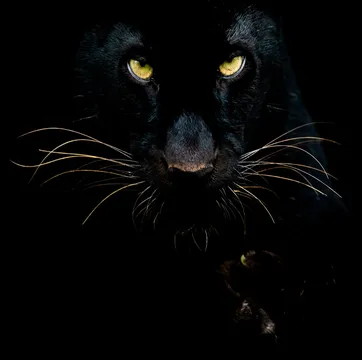
Merrily Harper draws parallels between mystery big cats and the "Men in Black" (MIB) phenomenon, noting shared traits of shininess and unnatural blackness. She observes a certain "incompetence" in both, where the entities appear to be mimicking biological behavior—such as running or eating—without a clear purpose or natural fluidity. This suggests the forms are masks used to interact with the human world.

men in blackufocadillacsmimicrybehavior
Clint Richardson | Gain-Of-Function Research, Word Magic, & The Artificial Matrix
• 46:28 - 51:09

Clint Richardson | Gain-Of-Function Research, Word Magic, & The Artificial Matrix

Viral Hijacking of Cellular Vesicles and Exosome Mimicry

The discussion focuses on how viruses act as intracellular parasites that hijack the body's vesicular trafficking machinery for replication and transmission. The guest argues that exosomes can be manipulated to carry viral information, a process he calls exosome mimicry, which complicates the distinction between host cells and pathogens.

intracellular parasitesvesiclesexosome mimicrycytoplasmscientific literature
Chris Bledsoe | Entity Encounters, The Invisible College, & The Lady
• 26:13 - 28:09

Chris Bledsoe | Entity Encounters, The Invisible College, & The Lady

Symbolic Meaning of The Gift, Humanity's Lack of Direction

Chris Bledsoe explains that "The Gift" vanished shortly after his encounter with The Lady. In a subsequent experience a year later, the entity explained that the headless, legless object was symbolic of humanity having no direction. Bledsoe emphasizes the magical nature of these beings, claiming they can mimic helicopters, airplanes, and other conventional craft.

Dr. Stephen Hussey | The Heart Deception, Epigenetics, & The Health Evolution
• 50:40 - 52:53

Dr. Stephen Hussey | The Heart Deception, Epigenetics, & The Health Evolution

Dairy Sensitivity, Molecular Mimicry and Autoimmune Disease

The link between dairy consumption and autoimmune disease is explored through the concept of molecular mimicry, where proteins like casein can trigger attacks on the pancreas. While some populations have evolved lactase persistence, others may need to eliminate dairy to heal leaky gut and inflammatory conditions.

dairycaseinleaky guthashimoto'smolecular mimicry