

Topic: Isaac Newton

3 chapters in Aug – Oct 2026 · See all time

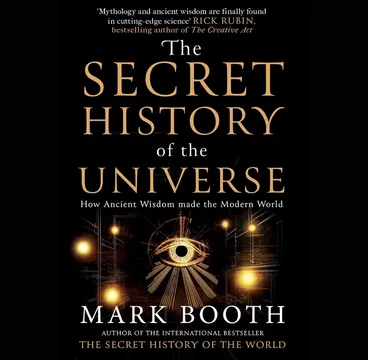
Mark Booth | Mystic Scientists, Strange Happenings, & The Secret History Of The Universe
• 7:45 - 11:50

Mark Booth | Mystic Scientists, Strange Happenings, & The Secret History Of The Universe

Isaac Newton and the Occult Roots of Quantum Physics

Isaac Newton is identified as a primary example of a scientist deeply embedded in alchemy, with economist Maynard Keynes famously labeling him the last of the magicians. Early 20th-century physicists like Heisenberg and Schrodinger turned to Indian mysticism, the Kabbalah, and Rosicrucianism to model the strange behaviors observed in the quantum realm. These pioneers used esoteric frameworks to understand particles popping in and out of existence and the influence of the observer on reality.

The Ethical Skeptic Roger B. Cunningham | ECDO Theory, Pole Shifts Explained, & Earth’s Cataclysmic Cycle
• 52:04 - 56:36

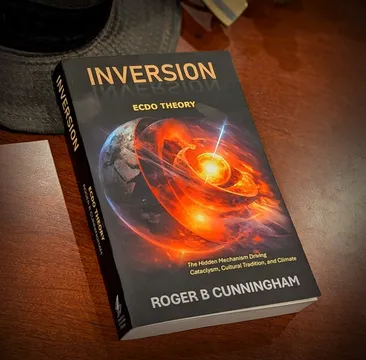
The Ethical Skeptic Roger B. Cunningham | ECDO Theory, Pole Shifts Explained, & Earth’s Cataclysmic Cycle

Azimuthal Alignment, Newgrange and Monument Obsequience

New measurements using satellite imagery confirm that many ancient monuments, such as Newgrange in Ireland, are aligned to North Pole Prime rather than solar events like the winter solstice. This "obsequience" suggests that ancient builders were obsessed with the celestial North Pole as the "unmovable mover" and the seat of God. The theory builds upon the work of Sir Isaac Newton, who suspected the Khufu pyramid was intimately connected to Earth's destructive cataclysmic cycles.

newgrangesacsayhuamanazimuthsatellite imagerysir isaac newtonobsequience
Matthew J. Bell | Bankers Trust, Nicholas Roerich, & The Mystic Stone From Sirius
• 58:34 - 1:00:56

Matthew J. Bell | Bankers Trust, Nicholas Roerich, & The Mystic Stone From Sirius

Albert Einstein, Logical Positivism and Alchemical Physics

Albert Einstein’s theory of relativity was heavily influenced by the philosophy of logical positivism and the work of Ernst Mach. Unlike Isaac Newton, who wrote extensively on alchemy and viewed the world as "God's sensorium," Einstein sought to calibrate reality strictly to empirically measurable phenomena like the speed of light. This shift in scientific philosophy is analyzed as a move toward a more pragmatic, yet potentially limited, understanding of the universe.

albert einsteinisaac newtonlogical positivismernst machrelativity