


Topic: Semiconductor

Semiconductor comes up in 3 chapters across 3 episodes of The Higherside Chats Free Show, from October 2023 to August 2025.

October 2023 August 2025

Related topics

Dr. Alexis Cowan | The Sunlight Psyop, Blue Light Conspiracy, & Your Solar Callus
• 1:01:50 - 1:05:08

Dr. Alexis Cowan | The Sunlight Psyop, Blue Light Conspiracy, & Your Solar Callus

Cold Plunge Biophysics, Semiconductors and Morasco Forage

The human body contains semiconductor networks that operate more efficiently at lower temperatures, a concept originally hypothesized by Albert St. Georgi. Using a grounded cold plunge, such as the Morasco Forage, at temperatures between 54-56 degrees Fahrenheit allows for the efficient transfer of photonic and electronic energy. This practice, combined with Epsom salts and sunlight, supports biophysical health by dropping the core temperature without the risks of extreme hypothermia.

cold plungesemiconductorsmorasco foragealbert st. georgigrounding
Dr. Jack Kruse | Light, Water, Magnetism & The Sacred Cows of Health
• 58:53 - 1:02:30

Dr. Jack Kruse | Light, Water, Magnetism & The Sacred Cows of Health

Water as a Semiconductor and Mitochondrial Chip Factories

While acknowledging Gerald Pollack's work, Dr. Cruz argues that water research must go deeper into semiconduction and isotopic variation. He references Martin Chaplin and Albert St. George to describe water as a liquid crystalline semiconductor that surrounds all proteins. This framework suggests that mitochondria function similarly to a "chip factory" using water to facilitate electronic structures.

gerald pollackmartin chaplinsemiconductormitochondrialiquid crystalline
Ashton Forbes | The MH370 Teleportation/Abduction Case, Orb Footage Analysis, & The Deeper Story
• 36:33 - 39:45

Ashton Forbes | The MH370 Teleportation/Abduction Case, Orb Footage Analysis, & The Deeper Story

Freescale Semiconductor Scientists and Espionage Motives

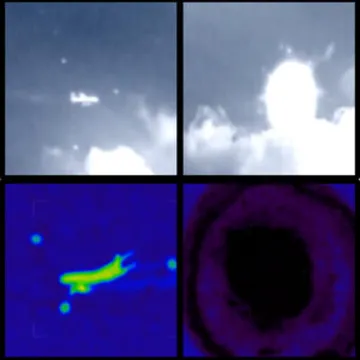
The presence of 20 Freescale Semiconductor employees on MH370 provides a potential motive for military intervention involving high-stakes espionage or technology protection. Forbes suggests the U.S. government may have acted to prevent sensitive intellectual property from reaching China. He expresses a belief that those hiding this information may do so out of a perceived necessity to protect society from the implications of such advanced technology.