

Topic: Euclidean Geometry

Euclidean Geometry comes up in 3 chapters across 3 episodes of The Higherside Chats Free Show, from July 2021 to November 2025.

July 2021 November 2025

Related topics

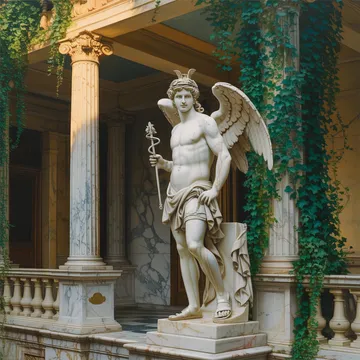
Steve & Krys Crimi | Hermes, Inverted Myth, Sacrifice, & Gnosis
• 11:53 - 14:56

Steve & Krys Crimi | Hermes, Inverted Myth, Sacrifice, & Gnosis

Sacred Geometry and the Portal to the Divine

Chris Crimey discusses her background in sacred geometry and its role as a conduit for the spiritual. She describes learning generative geometry through the Vesica Institute, noting that ancient Indian and Greek traditions used specific proportions to invite deities to inhabit artwork. The hosts and guests agree that these geometric ratios are the building blocks of reality, contrasting them with modern, soul-depleting architecture.
sacred geometryvesica instituterobert gilberteuclidean geometryaesthetics
Dave Zed & Co. | Secret Science, Dark Web Findings, & The Black Goo
• 22:25 - 25:24

Dave Zed & Co. | Secret Science, Dark Web Findings, & The Black Goo

Euclidean Vector Simulations and the Arconic Grid

Dave Zed recounts a conversation with an intelligence official regarding the prevalence of 90-degree right angles in human environments as a sign of a Euclidean vector simulation. Greg Carlwood links this to "arconic thinking," where mind parasites impose rigid grids and blocks on a reality that should naturally follow the fluid patterns of the phi ratio. They argue that this geometric imposition serves as a blueprint to suppress human subconscious creativity and keep it within a controlled frame.

Randall Carlson | Geomancy, The Sacred Template, & The Great Cosmic Work
• 20:59 - 23:51

Randall Carlson | Geomancy, The Sacred Template, & The Great Cosmic Work

Sacred Architecture, Symbolic Encoding and Temple Design

Carlson explains the process of encoding mythical and archetypal meanings into physical structures through symbols and geometry. Unlike standard Euclidean geometry, sacred geometry attaches symbolic connotations to numbers and measures. Using the Temple of Dendera as an example, he describes how the traits of the deity Hathor dictate the specific geometric patterns and ratios used in the architectural plan.